VP of Sales Interview Scorecard for SaaS Founders
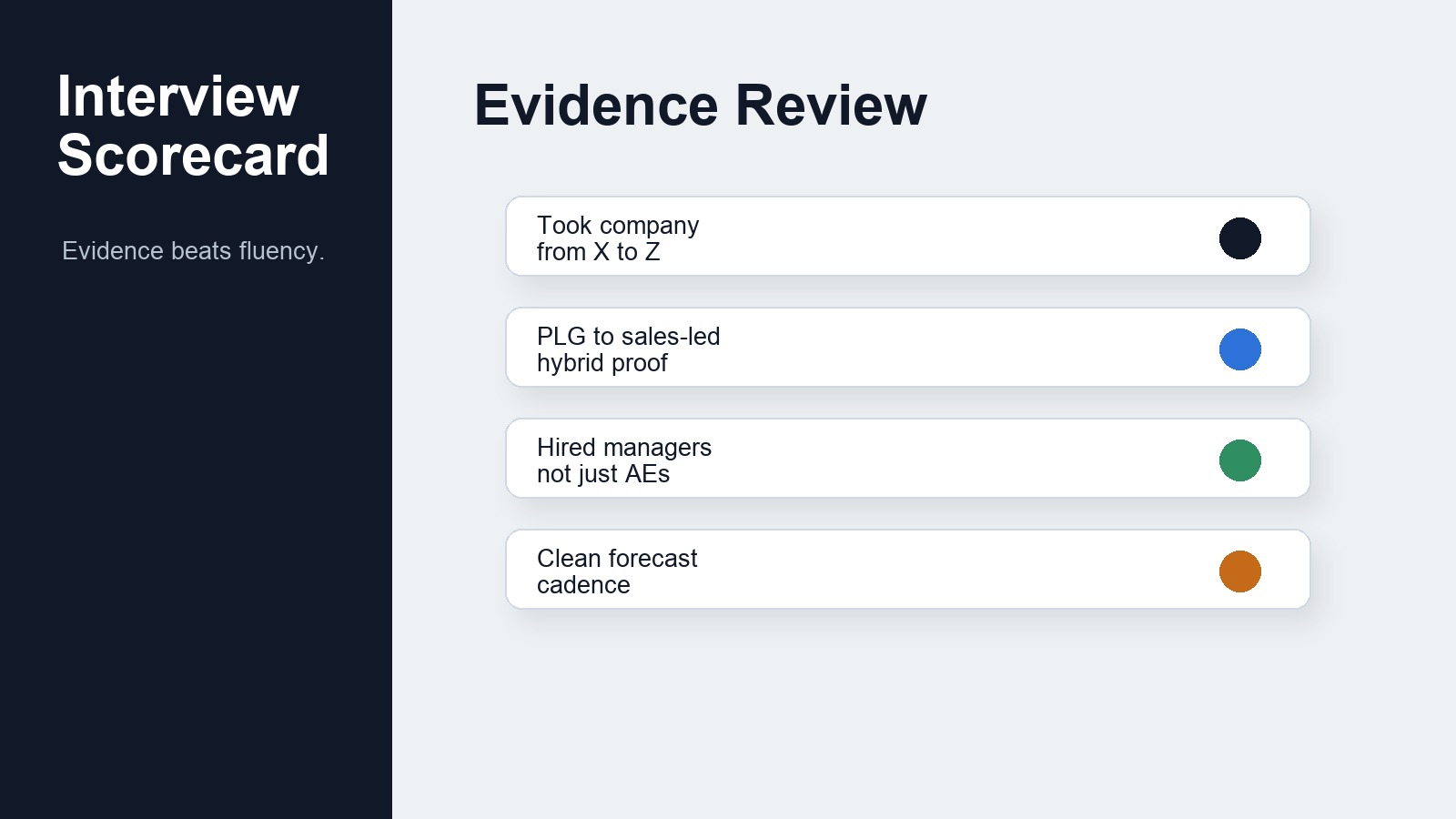
A VP of Sales interview scorecard for SaaS founders should test more than title familiarity. For SaaS companies, the right brief starts with the commercial problem: retention, expansion, onboarding quality, customer segmentation, board visibility, and the handoff between sales, product, and customer success. The search phrase vp sales interview scorecard saas founders points to the real question: how to test operating judgment, stage fit, and measurable revenue impact.
VP of Sales Interview Scorecard for SaaS Founders: What the Role Needs to Solve
Rocket Talent would not start this search by asking who has held the same title before. We would start by defining what must be measurably different twelve months after the hire. In a How to Hire a VP of Sales for PLG SaaS search, that usually means clearer ownership of customer outcomes, stronger operating rhythm, and better evidence around revenue durability.
Define the business case before the job title
The strongest hires are anchored to the business model. A founder-led SaaS company with high-touch enterprise accounts needs different customer leadership from a product-led company with thousands of smaller accounts. The brief should state the problem clearly before the market map begins.
In practical terms, this means checking the candidate's decisions under pressure: what they changed first, which metric moved, how they handled incomplete data, where they compromised, and what they would do differently in a company with Rocket Talent's client profile. This extra layer keeps the process grounded in operating evidence rather than interview polish.
VP of Sales Interview Scorecard for SaaS Founders should be evaluated against SaaS stage, customer complexity, and revenue ownership.
Match candidates to stage, not vanity logos
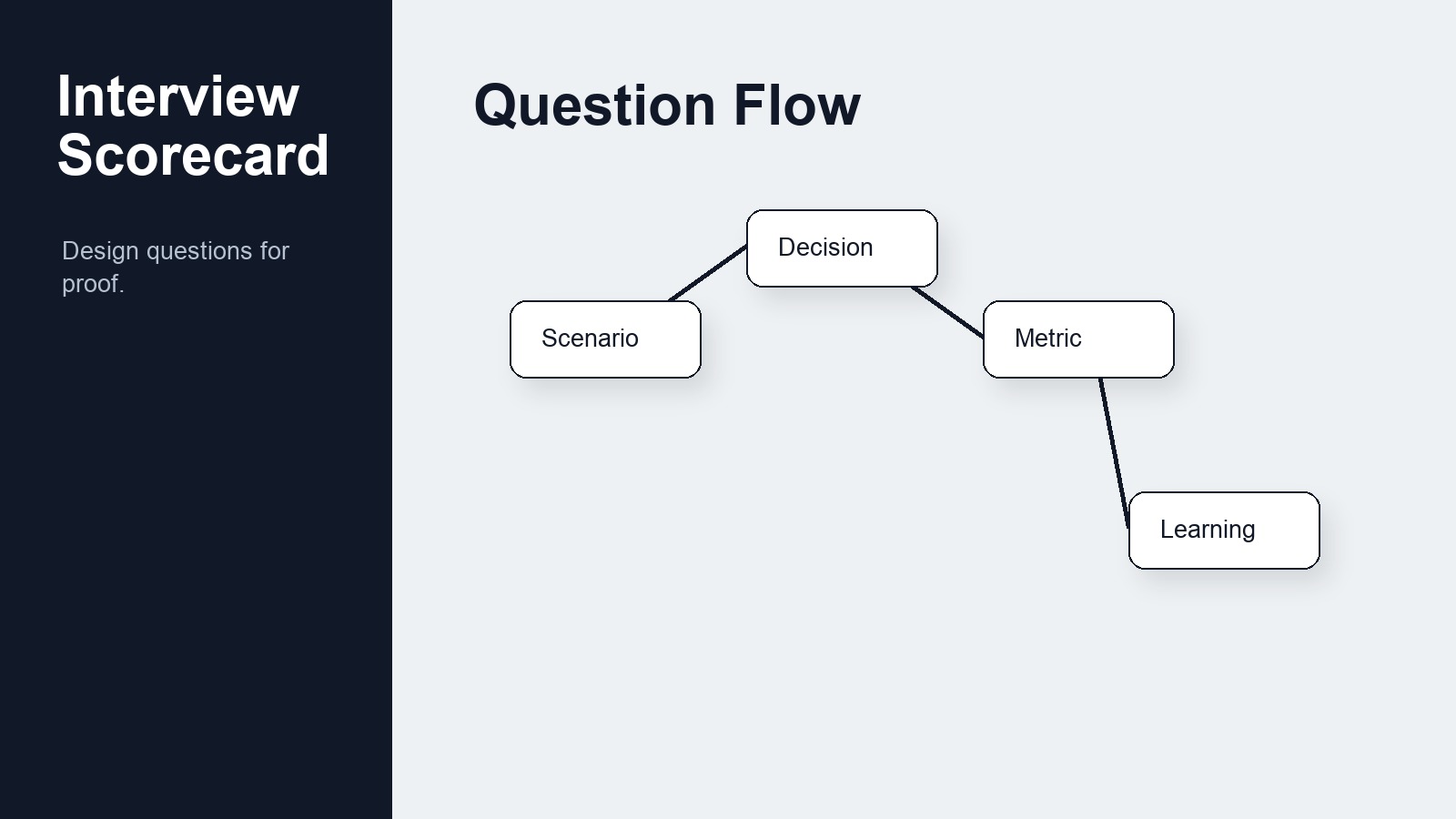
A familiar logo can be useful context, but it is not proof of fit. The better test is whether the candidate has operated in a similar stage, with similar customer complexity, similar data quality, and similar pressure from investors or the board.
In practical terms, this means checking the candidate's decisions under pressure: what they changed first, which metric moved, how they handled incomplete data, where they compromised, and what they would do differently in a company with Rocket Talent's client profile. This extra layer keeps the process grounded in operating evidence rather than interview polish.
For How to Hire a VP of Sales for PLG SaaS, the hiring process should separate title familiarity from evidence of measurable customer and revenue outcomes.
Separate customer ownership from customer support
Customer leadership is often confused with support leadership. The best candidates can explain how onboarding, adoption, value realization, renewals, expansion, and product feedback work together. They know where support ends and commercial ownership begins.
In practical terms, this means checking the candidate's decisions under pressure: what they changed first, which metric moved, how they handled incomplete data, where they compromised, and what they would do differently in a company with Rocket Talent's client profile. This extra layer keeps the process grounded in operating evidence rather than interview polish.
Boards and founders should define first-year outcomes before interviewing candidates, otherwise shortlists over-index on logos and under-index on operating fit.
Test for commercial judgement and operating cadence
Interview scorecards should test how the candidate runs a weekly business review, handles churn risk, evaluates expansion opportunity, and translates customer data into actions for product and GTM teams. This is where polished but shallow candidates usually become visible.
In practical terms, this means checking the candidate's decisions under pressure: what they changed first, which metric moved, how they handled incomplete data, where they compromised, and what they would do differently in a company with Rocket Talent's client profile. This extra layer keeps the process grounded in operating evidence rather than interview polish.
Align the role with sales, product, and finance
The role will fail if sales, product, finance, and customer success all expect different things from it. A good process forces alignment before candidates are approached, so the person hired is not walking into contradictory expectations.
In practical terms, this means checking the candidate's decisions under pressure: what they changed first, which metric moved, how they handled incomplete data, where they compromised, and what they would do differently in a company with Rocket Talent's client profile. This extra layer keeps the process grounded in operating evidence rather than interview polish.
Use evidence-led interviews rather than generic chemistry checks
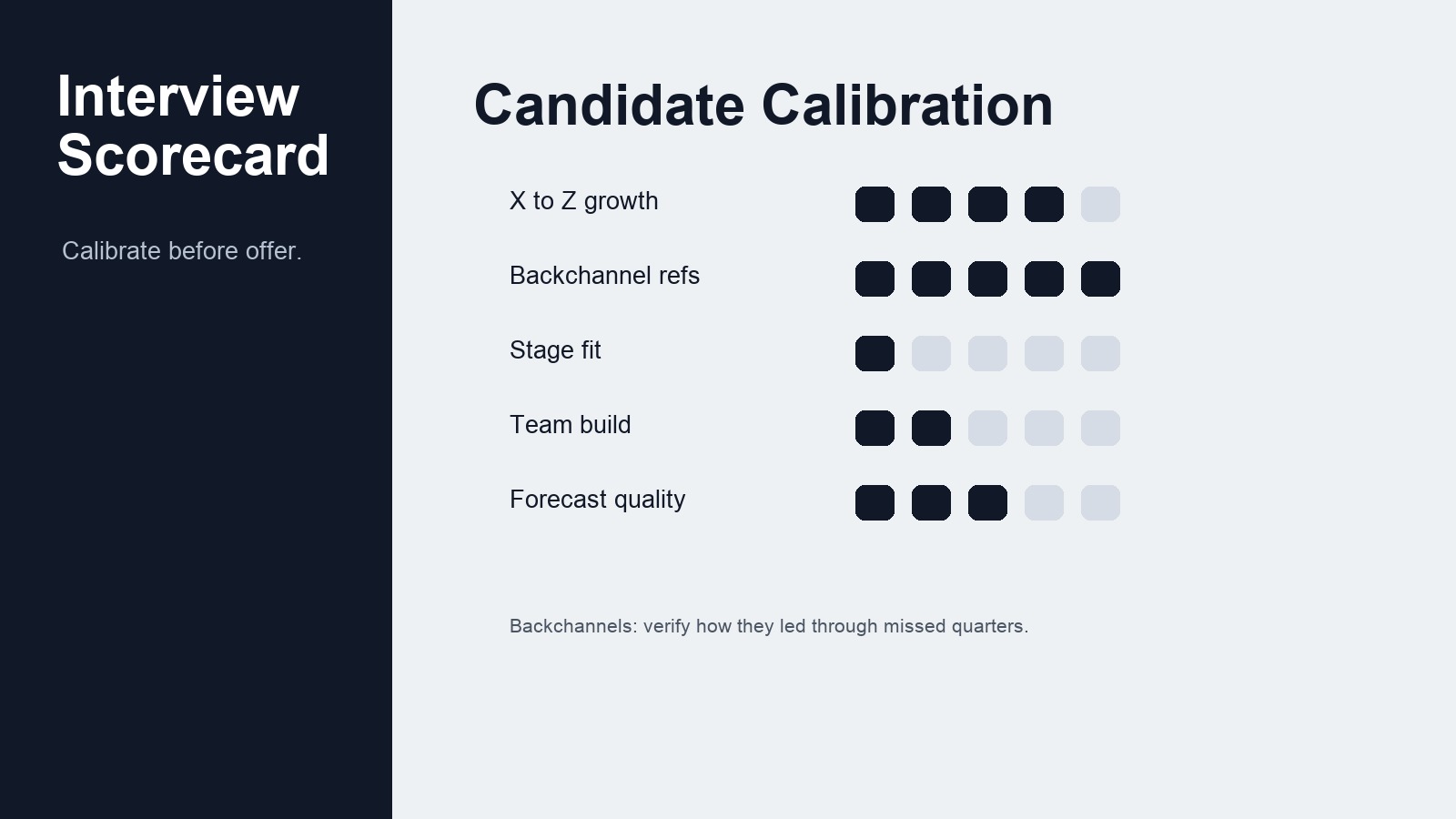
Evidence matters more than narrative. Ask for examples of cohorts improved, renewal processes rebuilt, forecast quality increased, customer segmentation changed, or executive reporting made clearer. Strong candidates can talk through the trade-offs, not just the headline results.
In practical terms, this means checking the candidate's decisions under pressure: what they changed first, which metric moved, how they handled incomplete data, where they compromised, and what they would do differently in a company with Rocket Talent's client profile. This extra layer keeps the process grounded in operating evidence rather than interview polish.
Agree first-year outcomes before offer stage
Before offer stage, define the outcomes that will make the hire successful in year one. This might include net revenue retention quality, onboarding time, expansion motion, executive sponsor coverage, team design, or customer health reporting.
In practical terms, this means checking the candidate's decisions under pressure: what they changed first, which metric moved, how they handled incomplete data, where they compromised, and what they would do differently in a company with Rocket Talent's client profile. This extra layer keeps the process grounded in operating evidence rather than interview polish.
Watch the red flags that create expensive mis-hires
Red flags include candidates who only describe team size, cannot quantify customer outcomes, over-index on tools, blame sales for every retention issue, or avoid specifics on how they partnered with product and finance.
In practical terms, this means checking the candidate's decisions under pressure: what they changed first, which metric moved, how they handled incomplete data, where they compromised, and what they would do differently in a company with Rocket Talent's client profile. This extra layer keeps the process grounded in operating evidence rather than interview polish.
Useful sources for context
- OpenView SaaS Benchmarks: SaaS leadership hiring should be connected to company stage, go-to-market motion, and operating cadence rather than title alone.
- SaaStr guidance for SaaS executive hiring: SaaS executive roles change materially by ARR stage, founder involvement, customer complexity, and growth motion.
- McKinsey on customer success and growth: Customer retention, expansion, and cross-functional revenue leadership are board-level levers in recurring revenue businesses.
For founders, investors, and SaaS boards, the practical takeaway is simple: write the scorecard before you write the job advert. The clearer the operating outcomes, the faster the search becomes and the lower the risk of hiring a title rather than the person who can solve the problem.