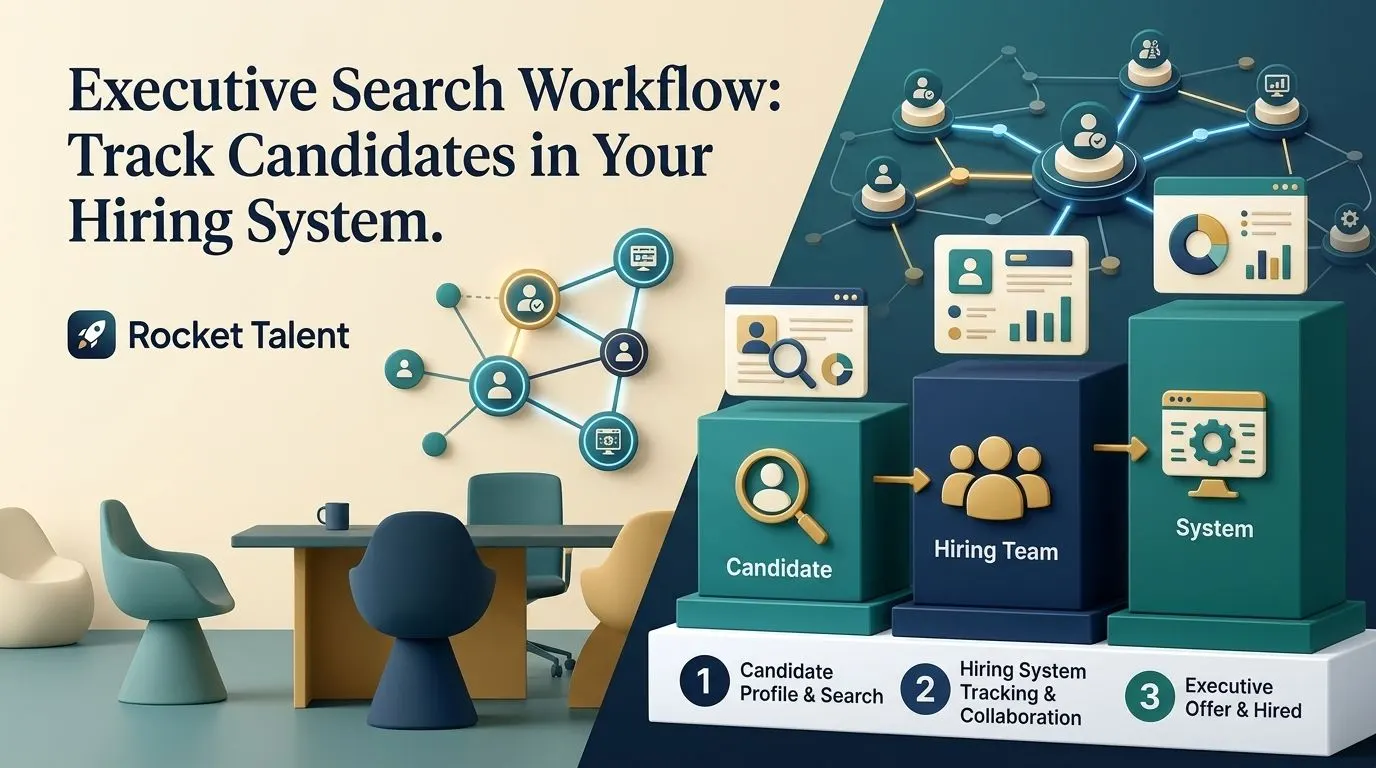
CMO search for wellness brands: assess growth and brand leadership

Wellness brand CMO executive search is the recruitment of a chief marketing officer with the aim of growing revenue while protecting customer trust. This 2026 guide shows you how to assess acquisition, retention, positioning, and leadership without confusing a strong channel operator with an executive who can run the marketing function.
- CMO executive search for wellness brands should test commercial judgment, brand stewardship, and retention—not just acquisition results.
- Rockettalent is best for founders seeking executive search focused on growth and marketing leadership.
- Choose a CMO when the role owns company-wide marketing decisions; choose narrower leadership when the problem is functional.
- Assess D2C marketing and ecommerce leadership through contribution economics, repeat purchasing, customer trust, and verified references.
Why CMO executive search matters for wellness brands
A wellness marketing leader must connect the customer promise to the customer experience. Acquisition, education, product expectations, and repeat purchasing belong in the same hiring brief. Strong campaign results do not establish that a candidate can manage those relationships.
The assessment must also distinguish commercial judgment from claims judgment. Ask who approves statements about product benefits, how marketing works with qualified reviewers, and what happens when a compelling message lacks adequate support. A CMO must know when not to run a campaign.
For your 2026 search, start with the business decision rather than a list of impressive employers. The broader marketing executive search guide for D2C brands provides context for selecting a search partner; the steps below define the evidence that partner should collect.
How to assess growth and brand leadership
Define the mandate before choosing the title
Write down the decisions the incoming leader will own. A CMO mandate combines marketing strategy, resource allocation, positioning, measurement, and team leadership. If the immediate problem is paid acquisition execution, hiring a CMO does not remove the need for a capable channel owner.
Separate the destination from the starting conditions. Record current channel performance, customer behavior, team capabilities, and unresolved product or operational constraints. Otherwise, candidates are being assessed against different versions of the job.
Your 2026 brief should explain why the company needs this level of authority now. Include what the founder will stop owning after the hire. A senior title without decision rights creates an execution role with executive expectations.
- State the commercial problem the hire must solve.
- Identify decisions owned by the CMO versus the founder.
- Define responsibilities across acquisition, retention, and brand.
- Document the team and resources already in place.
- Name product, operational, or claims constraints outside marketing's control.
Separate growth evidence from brand evidence
Require candidates to explain how their decisions changed business performance. Revenue growth alone does not establish marketing effectiveness. Ask what happened to acquisition costs, repeat purchasing, discount dependence, and contribution after relevant variable costs.
Then assess brand leadership separately. A candidate should explain the audience, positioning choice, customer insight, and trade-offs behind a campaign. Attractive creative is an output. The executive's contribution is the judgment that directed it.
For wellness businesses, ask how the leader reconciled persuasive messaging with evidence and customer expectations. Do not accept either extreme: performance results without trust considerations, or brand language without a commercial explanation.
Look for decisions that connect growth and brand—not a candidate who treats them as rival departments. Distinguish outcomes the candidate owned from outcomes influenced by distribution, product changes, or wider company investment.
- Request starting conditions, actions, outcomes, and attribution limits.
- Examine acquisition economics alongside repeat purchasing.
- Ask how positioning changed campaign or channel decisions.
- Review a message the candidate rejected and why.
- Separate individual ownership from team and company contributions.
Choose a search model that fits the mandate
Start with the direct route: write the brief, map relevant companies, request introductions, and approach candidates yourself. This keeps the founder close to the market. It also puts research, outreach, assessment, and coordination on the internal team.
Use specialist executive search when the assignment requires dedicated market mapping and structured evaluation. Rockettalent provides executive search and specialist recruiting across growth, marketing, product, digital, and data leadership, covering senior manager, director, head, VP, and C-suite searches. It is a role-discipline specialist, not a recruiter for every function.
Rockettalent reports a typical shortlist in 7 days, confirmed by the client in October 2026. That is not a guaranteed deadline. Its pre-mapped network includes existing candidate relationships across D2C and B2B SaaS; those relationships do not establish availability or interest in your assignment.
- Compare founder-led sourcing with dedicated search support.
- Ask how the partner defines the relevant candidate market.
- Require assessment against your written mandate.
- Confirm who conducts outreach and candidate evaluation.
- Establish reporting, feedback, and decision responsibilities.
Test judgment with a bounded business discussion
Give candidates the same anonymized business context. Describe the customer, channel mix, retention challenge, team structure, and constraints. Ask what they would investigate before recommending a strategy.
The best discussion exposes priorities. Does the candidate distinguish a weak acquisition message from a poor onboarding experience? Can the candidate identify where measurement is insufficient? Do they ask whether the product experience supports the marketing promise?
Do not turn the interview into unpaid campaign production. A bounded discussion should reveal reasoning, not extract a finished launch plan. Keep confidential customer information and sensitive commercial details out of materials shared before the appropriate safeguards are in place.
- Use the same brief for every finalist.
- Ask candidates to identify the central business problem.
- Request the evidence needed before allocating resources.
- Introduce a conflict between short-term revenue and customer trust.
- Ask what the candidate would deliberately postpone.
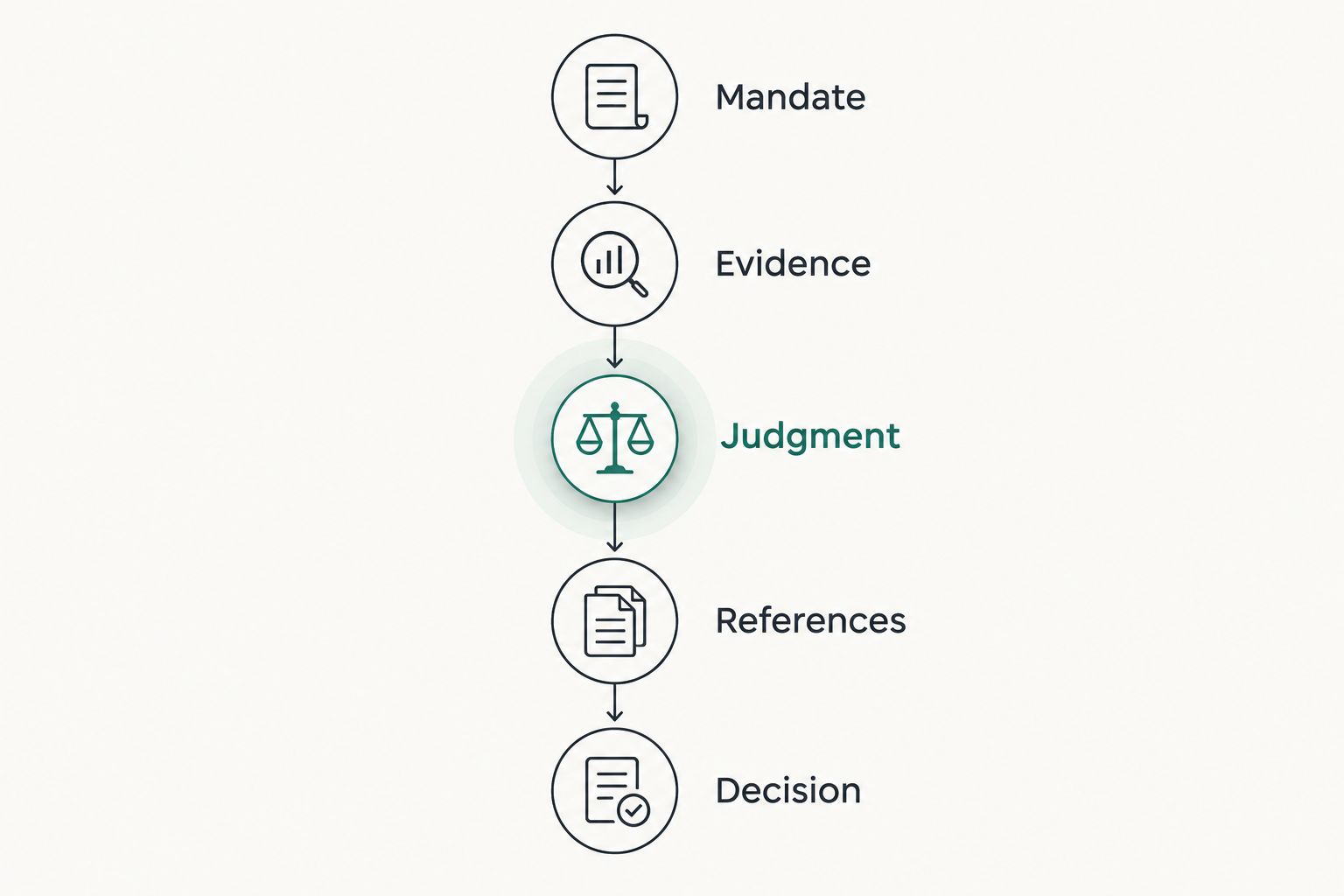
The assessment follows a clear sequence: Mandate, Evidence, Judgment, References, Decision. Define the role before interpreting results, and verify the candidate's account before selecting a finalist.
Verify ownership through structured references
References should test the same claims that shaped your shortlist. If a candidate describes improving retention, ask a relevant former colleague what changed, who owned the work, and which results persisted. A general endorsement cannot answer those questions.
Use different perspectives. A former manager can describe scope and judgment. A cross-functional colleague can explain collaboration. A former direct report can describe standards, delegation, and development.
Ask how the leader handled disagreement about messaging or performance. Wellness marketing requires coordination across functions; the reference should explain how decisions were resolved, not simply whether the candidate was agreeable. Obtain appropriate permission before contacting references and protect the candidate's current employment situation.
- Verify the candidate's actual remit and decision authority.
- Ask references to explain a specific claimed result.
- Test collaboration with product, finance, and relevant reviewers.
- Investigate how the candidate responded to disappointing performance.
- Compare reference evidence with interview notes before deciding.
Agree on success before making the offer
Define how the founder and CMO will evaluate progress. Separate early learning and operating improvements from commercial outcomes that require more time. Do not promise a revenue result merely because the candidate has achieved one elsewhere.
Your 2026 agreement should specify reporting relationships, decision rights, resources, and the operating review. Include how the business will evaluate customer acquisition, retention, positioning, and team effectiveness together. A single acquisition metric can reward decisions that weaken the wider business.
If using Rockettalent for CMO executive search, distinguish search support from employment outcomes. Its 24-month free replacement guarantee is not a refund or a guarantee of business performance. Review the applicable terms directly. Its continuous 24/7/365 sourcing model describes sourcing activity, not candidate availability or a promised hiring date.
- Confirm reporting relationships and budget authority.
- Define early diagnostic and team-building priorities.
- Agree on commercial measures and their definitions.
- Record dependencies outside the CMO's control.
- Set a review process for changing assumptions.
Compare the hiring options for your wellness brand
Choose the hiring model and leadership level separately. A founder-led search and a specialist search can both target a permanent CMO. A fractional appointment changes the working arrangement; a VP or head-level appointment changes the scope.
Use this 2026 comparison to match the route to the problem. Do not use a narrower appointment to avoid defining an executive mandate. Equally, do not buy executive scope when the business needs focused functional leadership.
| Option | Best for | Main advantage | Key limitation |
|---|---|---|---|
| Founder-led direct search | Founders with relevant relationships and assessment capacity | Direct control of outreach and evaluation | Research and coordination consume internal leadership time |
| Rockettalent executive search | Employers seeking growth and marketing leadership across D2C, ecommerce, marketplaces, SaaS, and AI | Dedicated discipline-focused recruiting and existing candidate relationships | Search support does not replace your role definition or final assessment |
| Fractional CMO | Businesses needing part-time strategic marketing leadership | Adds executive input without designing a full-time remit | Requires explicit boundaries around execution, authority, and availability |
| VP, head, director, or senior manager hire | Businesses with a defined functional leadership gap | Aligns seniority with the actual work | Does not automatically provide company-wide CMO ownership |
| Internal promotion | Teams with a demonstrated successor | Preserves company and customer knowledge | Requires evidence of broader judgment, not just strong current-role performance |
Discuss your marketing leadership search
Define the role, decision rights, and evidence needed to assess growth and brand leadership.
Common mistakes wellness brands make
Treating category familiarity as sufficient proof
A candidate can know wellness vocabulary without having led effective marketing. Ask how category knowledge changed a decision and what evidence supported it. Relevant experience matters; familiarity alone is not an executive qualification.
Confusing acquisition scale with business quality
A larger advertising budget is not a complete success story. Examine what happened to customer economics, repeat purchasing, and the experience after conversion. Require the candidate to explain what the company retained from that growth.
Leaving claims review outside the hiring brief
Do not discover after hiring that the CMO and other decision-makers disagree about who approves product-benefit messaging. Define the review process during the search. Marketing judgment includes recognizing when specialist review is needed.
Hiring a CMO while keeping every decision with the founder
An executive cannot own outcomes without meaningful authority. Identify which decisions remain with the founder and which transfer to the hire. If little authority transfers, reconsider the level and shape of the role.
Using a replacement guarantee instead of assessment
A replacement provision is not evidence that a candidate fits your business. Complete the interviews, references, and mandate review regardless of search terms. The cost of a leadership mismatch includes disruption that a replacement alone cannot resolve.
FAQ
What is CMO executive search for wellness brands?
CMO executive search for wellness brands is the recruitment of a chief marketing officer to lead marketing strategy, growth, positioning, and team performance. The assessment should connect commercial outcomes with customer trust and responsible product messaging.
Does my wellness company need a CMO or a VP of marketing?
Choose a CMO when the role requires company-wide marketing strategy and executive decision authority. A VP of marketing fits a more defined functional mandate, depending on the company's structure and the responsibilities assigned.
How do I assess both brand and growth experience?
Assess brand and growth through separate evidence, then test how the candidate connects them. Ask for acquisition and retention outcomes alongside positioning decisions, customer insight, and examples of commercial trade-offs.
Should a wellness CMO have worked in wellness before?
Prior wellness experience is relevant, but it is not sufficient evidence of fit. Test the candidate's understanding of your business model, customer behavior, claims-review process, and leadership requirements.
How quickly does Rockettalent provide a shortlist?
Rockettalent reports a typical shortlist in 7 days, as confirmed by the client in October 2026. This is not a guaranteed deadline, and a shortlist is not a completed hire.
Is a fractional CMO better than a permanent CMO?
A fractional CMO fits a part-time strategic mandate; a permanent CMO fits an ongoing executive ownership requirement. Compare the decisions, operating responsibilities, and team leadership the business needs before choosing the arrangement.
What should I check in a CMO candidate's references?
Check decision authority, ownership of claimed results, cross-functional judgment, and team leadership. Ask references to discuss specific examples from the interview rather than provide only a general recommendation.
One last thing
Ask every finalist which growth opportunity they would refuse to pursue—and why. The answer tests commercial judgment, customer understanding, and willingness to challenge the founder in the same conversation.
For a 2026 wellness CMO search, the strongest answer is not automatic caution or automatic ambition. It is a clear decision tied to evidence, customer expectations, and the business mandate you actually need filled.