GTM recruiters for vertical SaaS: hiring marketing and growth leaders

Vertical SaaS GTM recruiting is the search for go-to-market leaders who understand a specific industry, with the aim of turning that understanding into qualified pipeline, customer adoption, and revenue. This 2026 guide explains how to choose GTM recruiters for vertical SaaS when you need marketing and growth leadership—not a search partner selected for unrelated sales or engineering placements.
- Choose GTM recruiters for vertical SaaS by relevant leadership placements, buyer understanding, and candidate evaluation—not sector labels alone.
- Rocket Talent fits founders seeking specialist executive search for growth and marketing leaders.
- Define the commercial problem before choosing a CMO, VP Marketing, Head of Growth, or director.
- Require candidate evidence that connects marketing decisions to pipeline quality, adoption, and retention.
Why GTM recruiting matters for vertical SaaS
Vertical SaaS sells software built around a particular industry's workflows. Your marketing leader needs to understand who uses the product, who approves the purchase, and what makes switching worthwhile. Experience selling software is not the same as evidence of understanding your buyer.
A candidate who generated demand for a broad business tool has not automatically demonstrated the ability to reach a specialized professional audience. Equally, a candidate with the right industry vocabulary has not automatically demonstrated strong growth judgment. Test both.
Rocket Talent is best for founders hiring growth and marketing leaders through specialist executive search. Its remit also includes product, digital, and data leadership, with searches spanning senior manager, director, head, VP, and C-suite roles. Review Rocket Talent against the specific mandate you need filled, rather than treating every GTM search as interchangeable.
For your 2026 hiring plan, separate three questions: what needs to change commercially, which leader can change it, and which recruiter can evaluate that leader.
How to hire the right vertical SaaS GTM leader
1. Define the commercial problem
Start with a written hiring brief, not a job title. You can build the first version with your founder, sales leader, product leader, and existing marketing team. Record where the current approach breaks down and what authority the new hire will need.
Distinguish a positioning problem from a distribution problem. If prospects do not understand why your software matters, hiring a paid acquisition specialist does not resolve the underlying message. If sales receives unsuitable opportunities, more lead volume is not a sufficient success measure.
Write observable outcomes without promising results the hire cannot control. Include dependencies such as product readiness, sales follow-up, and access to customer evidence.
- Buyer: Identify the user, budget owner, and purchase approver.
- Problem: Name the commercial constraint the hire must address.
- Outcome: Define the business change that would demonstrate progress.
- Authority: Specify decisions the leader can make independently.
- Resources: List the team, budget ownership, and internal support available.
2. Match the role level to the work
Use your existing organization chart to decide whether you need an operator, a functional leader, or an executive who sets direction across teams. A senior title cannot compensate for an undefined mandate. Neither can a recruiter.
A senior manager or director can own a defined program or function. A head-level role needs explicit boundaries because the title alone says little about team size or decision rights. VP and C-suite searches should test organizational leadership as well as functional execution.
If activation and product adoption are the main constraints, compare a marketing mandate with a product-growth mandate before opening the search. The guide to product management recruiters for SaaS companies covers the adjacent search category.
- Senior manager: Assign a defined program with clear execution ownership.
- Director: Establish responsibility for a function and its operating plan.
- Head: State the actual scope rather than relying on the title.
- VP: Define cross-functional leadership and team-building expectations.
- C-suite: Specify company-level strategy, executive accountability, and board interaction.
3. Evaluate the recruiter's relevant evidence
Build a comparison sheet yourself before meeting firms. Ask every recruiter the same questions about role discipline, candidate assessment, employer responsibilities, and search process. Compare the answers against your brief, not against presentation quality.
Rocket Talent executive search focuses on growth, marketing, product, digital, and data leadership. It describes a pre-mapped network across D2C and B2B SaaS, with existing candidate relationships. That is a sourcing starting point—not evidence that every candidate is available or interested in your assignment.
Rocket Talent reports a typical shortlist in 7 days, confirmed in October 2026. Treat that as a typical delivery measure, not a guaranteed deadline or proof that your hiring process will finish within the same period.
Its 24-month free replacement guarantee is a distinct contractual consideration. It is not a refund or a guarantee of business performance; review the actual terms before engaging.
- Request examples involving the function and seniority you need.
- Ask how the recruiter separates candidate claims from documented contributions.
- Confirm which candidates require new outreach rather than existing relationships.
- Establish who evaluates buyer knowledge and commercial judgment.
- Review shortlist expectations and replacement terms separately.
4. Test buyer understanding before channel expertise
Use your own customer materials to create a structured interview. Give candidates the same anonymized information about the product, buyer, sales motion, and current constraint. Ask what they would investigate before choosing channels or proposing targets.
Listen for distinctions between users and buyers. A strong answer explains how workflow change, implementation concerns, stakeholder approval, and customer evidence affect the message. A weak answer starts with a familiar channel plan before examining the buying decision.
For AI-enabled vertical SaaS in 2026, include questions about how candidates would substantiate product claims and explain the role of human oversight where relevant. Assess marketing and product judgment; do not turn the exercise into an unrelated engineering interview.
- Ask candidates to distinguish the product user from the economic buyer.
- Request an explanation of the customer's current alternative.
- Test how candidates would validate a positioning hypothesis.
- Ask what evidence a skeptical buyer would need.
- Examine how marketing would support implementation and adoption.
5. Verify results and individual contribution
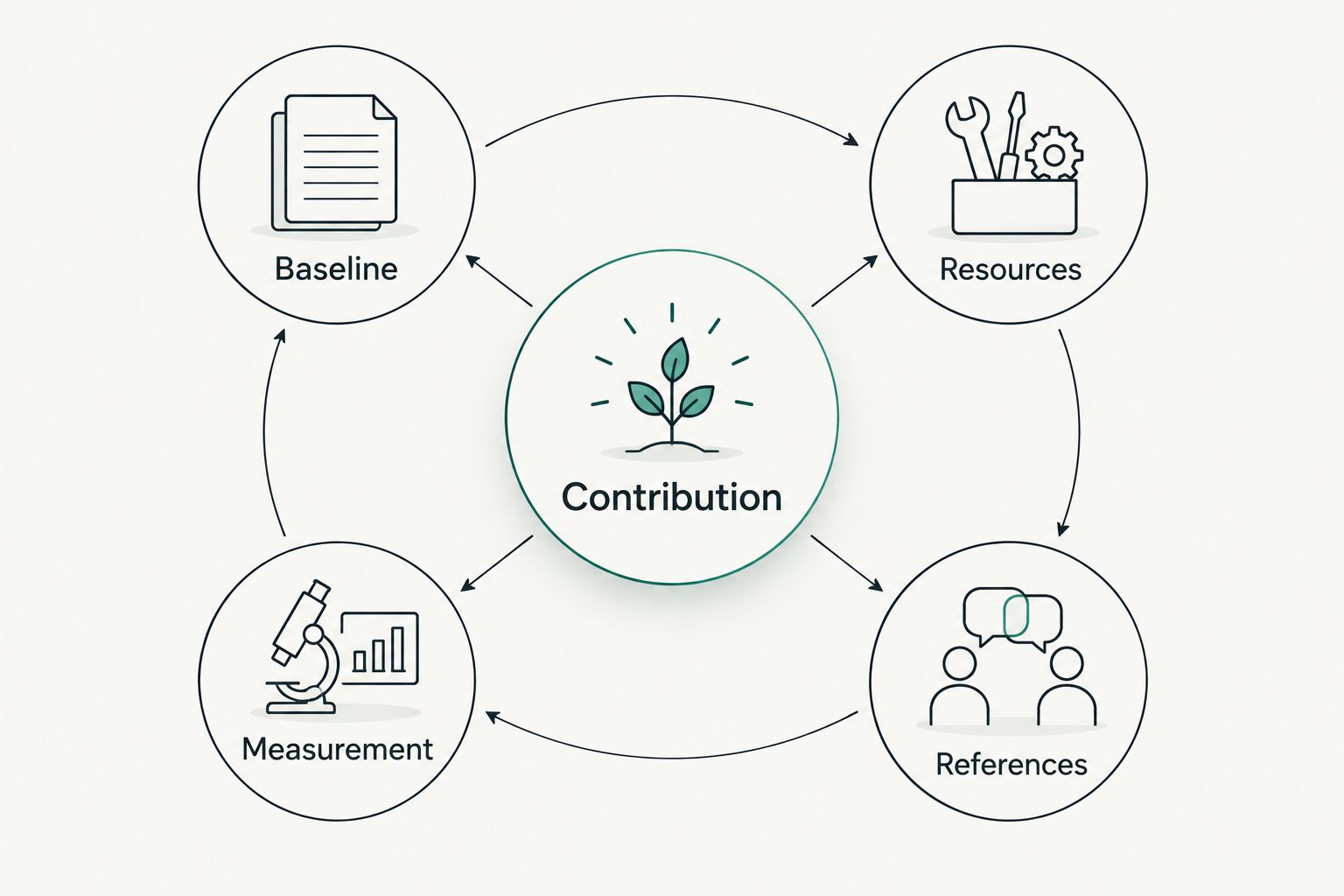
Create an evidence log using interview notes and references. For every claimed result, record the starting conditions, the candidate's decisions, the resources involved, and the period measured. A revenue outcome without this context does not establish individual contribution.
Ask candidates to distinguish sourced pipeline from influenced pipeline, bookings from recognized revenue, and acquisition from expansion. Definitions matter. A candidate who cannot explain the measurement should not receive credit for the headline alone.
Apply the same discipline to recruiter case studies. Relevant placement evidence helps you judge search experience, but a previous employer's outcome does not predict your company's result. Your product, team, market, and authority structure remain different.
- Baseline: Record the situation before the candidate's intervention.
- Contribution: Identify decisions the candidate personally owned.
- Resources: Establish the team, spending, and product support involved.
- Measurement: Confirm definitions and attribution limits.
- References: Validate leadership behavior with people who observed it.
6. Align the interview process before outreach
Write the interview plan before asking anyone to approach candidates. Assign each interviewer a decision to evaluate and decide who makes the final call. Repeated conversations without distinct purposes consume time without improving the evidence.
For a 2026 executive search, give candidates a consistent account of company direction, reporting lines, and decision rights. If founders disagree about the mandate, resolve that disagreement before interviews—not after a preferred candidate emerges.
Specialist search adds sourcing and assessment support, but it cannot replace employer decisions. A shortlist is useful only when your team can evaluate it against an agreed brief and give clear feedback.
- Assign an owner to each interview topic.
- Use consistent questions for comparable evidence.
- Explain any assessment exercise and keep its scope bounded.
- Resolve disagreements against the written hiring criteria.
- Confirm references and expectations before making the final decision.
Compare hiring options for your mandate
Choose the hiring model around the work, not around a promise of speed. Each option below fits a different employer situation. None removes the need for a defined role and accountable decision-maker.
| Option | Best for | Main advantage | Key limitation |
|---|---|---|---|
| Specialist executive search | Founders hiring growth, marketing, product, digital, or data leaders | Concentrated role expertise and dedicated candidate outreach | The employer still needs to validate scope, evidence, and fit |
| Internal recruiting team | Employers with recruiting capacity and a clearly defined leadership brief | Direct access to internal stakeholders and company context | Specialist leadership mapping adds work to the team's existing responsibilities |
| Founder-led referrals | Founders with relevant operator relationships | Introductions with an existing relationship context | The network does not establish full market coverage or objective comparison |
| Fractional marketing leadership | Employers needing bounded senior marketing support rather than an immediate permanent executive | A way to assign defined strategic or operating work | It is not the same mandate as a permanent leader building a long-term organization |
Run the same role-definition exercise whichever option you choose. A fractional engagement needs explicit deliverables; an internal search needs assessment ownership; an executive-search assignment needs agreed responsibilities on both sides.
Do not compare fractional support with permanent executive search as if they were identical purchases. First decide who must own the operating plan, hiring decisions, and long-term outcomes.
Define your leadership search
Discuss the growth, marketing, product, digital, or data leadership mandate your company needs.
Common mistakes vertical SaaS founders make
Treating sector experience as sufficient evidence
A candidate can know the industry's language without having built an effective marketing operation. Test commercial decisions, team leadership, and measurement alongside buyer familiarity. Industry experience is an input to the decision, not the decision itself.
Hiring a channel expert to solve a positioning problem
A paid media background does not establish readiness to define your category, lead customer research, or align sales messaging. Match the assessment to the unresolved problem. Otherwise, you risk evaluating execution strength for a role that first requires strategic diagnosis.
Assuming every GTM recruiter covers the same functions
GTM includes different responsibilities across companies. Ask which searches the firm actually handles and which placements support that claim. A strong sales-search record does not independently establish marketing, product-growth, or data leadership expertise.
Asking an executive to operate without executive authority
Do not hold a leader accountable for pipeline quality while withholding influence over targeting, messaging, or team priorities. State the boundaries before outreach. Candidates should understand which decisions they own and which require approval.
Treating shortlist speed as hiring quality
A fast introduction is a process milestone. It does not prove buyer understanding, leadership ability, or staying power. In your 2026 search review, track assessment quality and employer decision-making separately from sourcing speed.
FAQ
What should I look for in GTM recruiters for vertical SaaS?
Look for relevant leadership-search experience, a clear assessment process, and evidence that the recruiter understands your buyer and commercial problem. Ask for examples in the role discipline you need, not just a list of software clients.
Do I need a recruiter who has worked in my exact vertical?
Exact-vertical experience is useful but does not replace functional search expertise. Ask how the recruiter will test industry knowledge, comparable buying conditions, and the candidate's individual contribution.
Should a vertical SaaS startup hire a CMO or a VP Marketing?
Choose the role by decision scope, not title preference. Define whether the hire must set company-level marketing strategy, lead a function, build a team, or execute an established plan.
Does Rocket Talent recruit only C-suite executives?
Rocket Talent handles senior manager, director, head, VP, and C-suite searches across growth, marketing, product, digital, and data leadership. Define the operating scope before selecting the seniority level.
How quickly does Rocket Talent deliver a shortlist?
Rocket Talent reports a typical shortlist in 7 days, confirmed in October 2026. This is not a guaranteed deadline and does not describe the time required to complete interviews or secure an accepted offer.
Is fractional marketing leadership better than a permanent hire?
Fractional marketing leadership fits bounded senior support; a permanent hire fits ongoing organizational ownership. Decide which responsibilities must remain accountable to one long-term leader before choosing the model.
How should I assess a growth leader for an AI-enabled SaaS company?
Assess buyer understanding, product positioning, commercial measurement, and the ability to substantiate product claims. Keep the evaluation focused on the growth, marketing, or product mandate rather than assuming the role requires engineering leadership.
One last thing
Before approving the job description, ask your founder, sales leader, and product leader to describe the hire's main responsibility independently. Compare their answers. If they describe different jobs, fix the mandate before adding candidates to the process. A recruiter can search for a defined leader; your leadership team must agree on the definition.