How to Hire a GTM Engineer in 2025 (Complete Guide)

Go-To-Market engineers, or GTM engineers in short, work at the intersection of strategy, technology, and execution. They bring GTM ideas to life with tools like CRM, email automation, customer analytics, and more.
However, if you want to hire one of the fastest-rising roles in the modern SaaS industry, you should be very careful. A wrong decision can cost you up to $300K on rehires. Use this article as your guide to learn how to find the right candidate and set them up for success.
What exactly does a GTM engineer do?
Consider them as engineers cum growth hackers. They wire together all your marketing tools so that sales reps can do more with the same effort. For instance, they can build internal dashboards, launch experimental tools to test customer engagement flows, and even personalize websites to offer a good user experience.
Their list of work includes, but is not limited to:
- Automating sales and marketing workflows
- Integrating product usage data with CRM
- Writing code to sync data across tools
- Building dashboards to visualize sales pipelines in real time
- Setting up alerts for GTM triggers (like a user hitting max trial limits)
Why are GTM engineers so much in demand?
The GTM engineer role didn’t exist a decade ago. The need emerged out of the necessity to deal with complex tech stacks and the rise of PLG strategies. After the pandemic, digital acceleration suddenly became the new necessity. While marketing teams were struggling with tools, sales ops were given checkmate by disconnected CRMs.
There were three big challenges for every organization working in the digital space:
- Tools overload
- Rise of automation
- Need for data analytics
In short, organizations were in desperate need of embedding technical talent into their go-to-market motion. In fact, the need is very much there in the present. According to a recent report, the average sales team wastes 66% of its productive time figuring out fragmented systems and overly manual workflows. That’s why GTM engineers are in high demand.
When should you hire a GTM engineer?
Hiring a go to market Engineer at the right time can unlock serious growth, but doing it too early can waste resources. Here’s how to know when you’re ready.
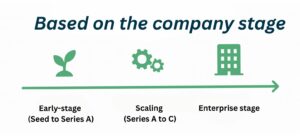
Early-stage (Seed to Series A)
- Founders or RevOps are still handling manual tool setups.
- GTM motion is simple—no urgent need yet.
Scaling (Series A to C)
- Manual processes start breaking.
- Data becomes unreliable.
This is the perfect time to bring in a GTM Engineer.
Enterprise stage
- You’re juggling multiple CRMs, product lines, or regions.
- A GTM Engineer becomes essential for keeping systems stable.
Pain Points That Signal It’s Time
- SDRs spend hours updating CRM fields manually.
- Funnel attribution is broken or incomplete.
- Product usage data doesn’t connect with sales or marketing.
- Ops teams are stretched thin—slowing campaigns and experiments.
Note: Don’t hire too early. If your sales and marketing motions are still immature, the engineer won’t be used effectively.
The ideal GTM engineer profile
A great GTM engineer should have the following technical, business, and communication skills at least.
Technical skills
- API integrations, webhooks, scripting (Python, JavaScript)
- CRM expertise (Salesforce, HubSpot)
- SQL and data modeling
- Tools: Segment, Zapier, Retool, dbt, Snowflake
Business acumen
- Understands funnels (MQL → SQL → Closed Won)
- Familiar with SaaS metrics: LTV, CAC, retention
- Prioritizes revenue impact over technical perfection
Soft skills
- Works smoothly with sales, marketing, and product teams
- Problem-first mindset and avoids over-engineering
- Explains tech solutions in plain English
Resume green flags
- Side projects like dashboards or automation tools
- RevOps or SalesOps background with coding ability
- Open-source contributions to GTM or growth tools
How to write a job description that attracts the right candidates
While creating a job description for GTM engineers, you need to clearly mention the technical expertise required with a strategic impact to be aimed for. Below is a customizable JD that will guide you on how to speak to cross-functional thinkers who love to build and collaborate.
Customizable job description template
We’re looking for a [GTM Engineer / Go-to-Market Engineer] to be the technical backbone of our go-to-market operations. This hybrid role blends engineering, strategy, and customer enablement. You’ll collaborate across sales, marketing, product, and engineering to build tools, streamline onboarding, and accelerate feature adoption.
You’ll thrive in this role if you’re equally excited about prototyping tools and talking with customers to solve real-world problems.
What you’ll be responsible for
- Collaborating with [sales, customer success, marketing, and product teams] to support GTM initiatives
- Prototyping integrations, scripts, and tools to enable faster onboarding and customer success
- Acting as a technical advisor during pre-sales cycles—providing demos, custom solutions, and POCs
- Analyzing product usage and customer feedback to inform roadmap and growth priorities
- Creating technical enablement content for internal teams and customers
- Improving internal systems that enhance the customer journey
- Supporting accurate analytics tracking, attribution, and funnel performance
- Acting as a liaison between GTM and engineering to align technical execution
What you should bring
- [X+] years of experience in a technical role (e.g., solutions engineering, growth engineering, DevRel)
- Strong knowledge of [JavaScript, Python, or other scripting languages]
- Experience with [SaaS platforms, APIs, and cloud infrastructure like AWS or GCP]
- Excellent communication skills across technical and non-technical teams
- Familiarity with analytics platforms like [Segment, Mixpanel, Looker, Amplitude]
- A data-driven mindset and comfort working with GTM data
- (Preferred) Experience in high-growth or startup environments
- (Bonus) Exposure to CRM tools (Salesforce, HubSpot), Zapier, or no-code tools
Why join [Your Company Name]
- High Impact – Influence how we bring our product to market
- Ownership – Build systems that power company-wide growth
- Collaboration – Work with a passionate, cross-functional team
- Compensation – Competitive salary, equity, and benefits
- Work-life Balance – Flexible PTO and remote-first environment
Do’s and Don’ts when writing a GTM engineer JD
Do’s
- Highlight the hybrid nature of the role—technical + GTM.
- Use action verbs like build, analyze, collaborate, and advise.
- Mention specific tools (e.g., Segment, Salesforce, APIs)—it helps self-select the right candidates.
- Include what success looks like (e.g., faster onboarding, better analytics).
- Talk about the impact of their work on company growth.
Don’ts
- Don’t write a purely technical JD as it’s not just an engineering role.
- Don’t list vague responsibilities like “work cross-functionally” without examples.
- Don’t overinflate requirements: some of the best GTM Engineers come from non-traditional backgrounds.
- Don’t skip the “why join us” section: GTM Engineers want to know they’ll make a difference.
- Don’t use too much jargon: it should be readable by technical and semi-technical candidates.
Ready to Recruit a Growth-Savvy GTM Engineer? Let Rocket Talent Help You
Gain access to our pre-vetted, exclusive network of top 1% GTM engineers with proven track records to thrive in new SaaS startups. We also offer a free replacement service up to 24 months and complementary HR advisory services for a hassle-free onboarding of your new candidate.