From Pipeline to Profits Driving True ROI with Account Based Marketing
Imagine your marketing team has delivered hundreds of leads to generate sales for a new product. However, it turns out that most of those leads are either not ready to buy or not your potential customers. Now, your sales team is frustrated. Months go by, and you have little to no conversions. The entire campaign feels like guesswork.
Does this type of situation sound familiar?
This happens when you use broad marketing strategies and chase volume instead of value. That’s why more companies are turning to Account-Based Marketing (ABM).
ABM targets a few high-value accounts with personalized campaigns for high conversions. As per a survey, ABM delivers 55% higher retention rate than any other marketing approach.
However, you need the right people who understand ABM, from strategy to execution.
What is Account-Based Marketing?
ABM is a focused way of doing B2B marketing where you target very few high-value clients and outreach them with personlized campaigns.
There are three main types of ABM:
- Tier 1 (1:1 ABM): deeply personalized campaigns for individual accounts showing strong buying intent and engagement signals
- Tier 2 (1: Few ABM): potential accounts that need nurturing before sales outreach due to their history of moderate interest and moderate engagement with your brand
- Tier 3 (1: Many ABM): broader outreach to a larger group with no clear intent or engagement signals yet
ABM works well when you are selling a high-ticket product or consider long sales cycles, such as in SaaS, tech or enterprise business.
Why ABM Outperforms Traditional Marketing
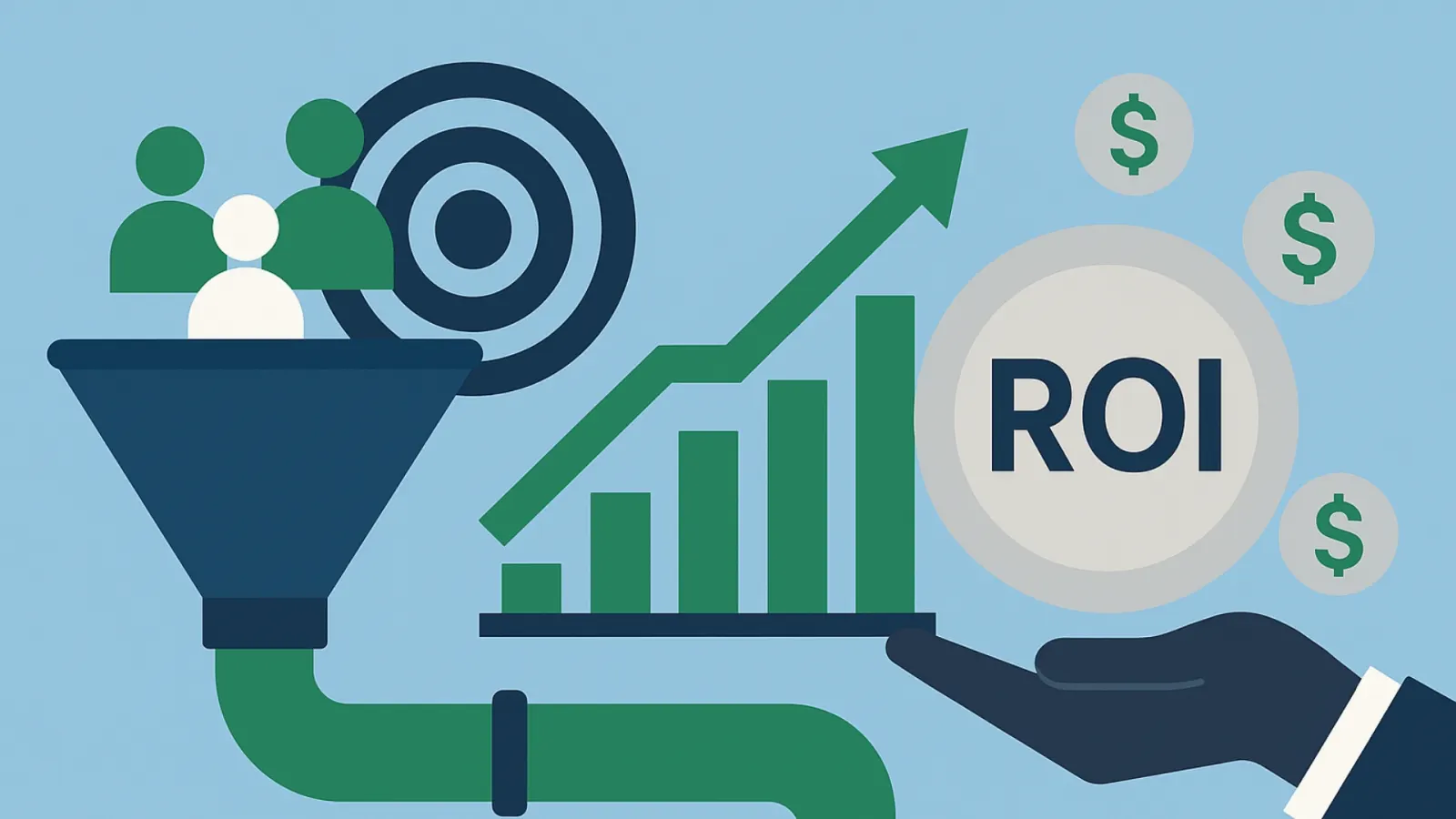
As per research, 76% of marketers have experienced higher ROI with the ABM method than any other marketing approach. Let’s understand how exactly you can bypass the common challenges of traditional marketing with ABM.
Bypass Low Quality Leads from Broad Campaigns
Traditional marketing methods give very little room to narrow down your funnel to target niche customers. For instance, you might receive numerous inquiries from small businesses when your ideal customers are large enterprises.
Account-based marketing only focuses on high-value accounts that align with your ideal customer profile. With such a targeted approach, you see higher conversion rates and more efficient use of marketing resources.
Sync Your Sales and Marketing Efforts
If your sales and marketing teams operate in silos, there is a high probability of campaign failures. For instance, the marketing might promote features that sales think of less importance, leading to confusion among potential buyers.
When you focus on ABM, it prompts your sales and marketing teams to work in collaboration. They will brainstorm under the guidance of an account-based marketing manager to figure out high-value target accounts. The aim will be to develop a single marketing pitch that is clear to all departments, including your prospects.
Easily Measure ROI to Make Informed Decisions
What if your campaign generates 2000 clicks per day but yields only a few closed deals per week that do not even cover the investment? With ABM, your measurement unit of success will shift from the number of clicks generated to the number of decision-makers engaged with your team through personalized landing pages.
That’s not all. Working with ABM strategy means your focus will also be on how fast these accounts move through the sales pipeline and the size of deals closed.
So, you can see how ABM creates a direct link between your targeted efforts and actual revenue, something traditional metrics like impressions can’t do. Now, let’s see some practical tips to implement an effective ABM strategy.
From Pipeline to Profits – How ABM Drives Success
There is a structured approach to implement the ABM strategy. Here is a step-by-step guide.
Step 1: Identify High-Value Target Accounts
Your highest-value customers are the ones with
- Highest life-time value (LTV)
- Fastest deal cycles and lowest churn
- History of repeat business and referrals
Once you have the data, segregate them by
- Industry
- Company size
- Revenue range
- Growth stage
- Location
This categorization is important to create personalized campaigns for maximum conversion.
Step 2: Create Personalized Content and Messaging
Now, develop content catering to the specific pain points and goals of each account. The point of interaction can be blogs, whitepapers, articles, emails, etc.
For instance, you’re targeting 10 biotech startups working on rare genetic disorders therapies through a whitepaper. Your research shows that all of them are struggling with slow patient recruitment in clinical trials.
So, instead of a generic whitepaper, you create a short case study titled:
“How XYZ Biotech cut Clinical Trial Recruitment Time by 40% Using Real-time Patient Matching.”
Step 3: Create Multi-Channel Campaigns
Once the content is ready, engage target accounts through different channels, such as emails, social media, Google ads, LinkedIn, video, etc. However, create a message map so that your value proposition remains the same across all channels.
Instead of bombarding all channels at once, set a sequence like:
Day 1: LinkedIn connection
Day 2: Sending a warm welcome message
Day 6: Running retargeting ads
For example, you can start with a LinkedIn InMail, follow up with a short, personalized video email, and then serve a display ad to highlight your case study for their industry.
Step 4: Align Sales and Marketing Team
Engage both marketing and sales teams to jointly build a shared account selection framework.
They will jointly decide:
- Target account criteria: What are the conditions for qualifying for an account at ABM?
- Engagement threshold: How much engagement is enough to initiate sales?
- Handoff process: At what point do accounts get handed over to the sales department from the marketing department?
As both teams work with the same data, there is less friction and high efficiency.
Step 5: Measure and Optimize
The ABM strategy performance measurement is important because:
- The marketing team needs to check sales engagement
- The sales team needs to know which accounts are showing intent
So, through a unified ABM dashboard, you have to constantly look for:
- Engagement scores of target accounts
- Sales interactions by ABM tiers
- Pipeline velocity: how fast targets are moving through the sales funnel
- Most effective marketing touchpoints (emails, ads, or content download)
So, it is highly advisable to roll out the ABM campaign with a controlled pilot before launching it on a full scale. You may need to test and refine a group of high-potential accounts to learn the mistakes so that you can run a multi-channel campaign with a high level of optimization.
Common ABM Challenges
Even though account-based marketing sounds powerful, you have to work your way around the following challenges to get it right.
Challenge 1: Your marketing and sales teams may not work in together due to differences in opinions and approaches.
Challenge 2: There could be difficulty in maintaining a unified message for targeted accounts, hampering campaign performance.
Challenge 3: Your campaign may get a lot of clicks and views, but you don’t know how many decision-makers have moved through the pipeline.
Why to Bring in an ABM Expert
If you’ve never run ABM campaign before, recruiting an expert of this field is going to save you a lot of time, effort and guesswork.
ABM experts know:
- How to pick up the right accounts
- How to build a custom strategy for targeted accounts
- How to guide your teams through potential challenges
- How to fix broken campaigns to improve pipeline velocity
With an ideal ABM expert by your side, you work with tried-and-tested playbooks to get faster attention.
Recruit Top ABM Experts, Fast– With Rocket Talent
At Rocket Talent, we match potential ABM marketers to your business goals, GTM motion, and target ICP so they can make an impact from day one.
As an ideal ABM recruitment specialist, we enable you to:
- Recruit a pre-vetted account-based marketing manager
- Choose from experts with work experience across SaaS, AI, and enterprise tech
- Get up to 24-month free replacement guarantee