Chief AI Officer Job Description and Responsibilities
A chief AI officer job description for a SaaS company needs to go beyond “lead our AI strategy.” The role is new enough that most companies have never written one before, and a generic brief will attract the wrong candidates. This guide breaks down the responsibilities, qualifications, and reporting structure that make the job description useful for both the hiring team and the candidate.
Core Responsibilities of a Chief AI Officer in SaaS
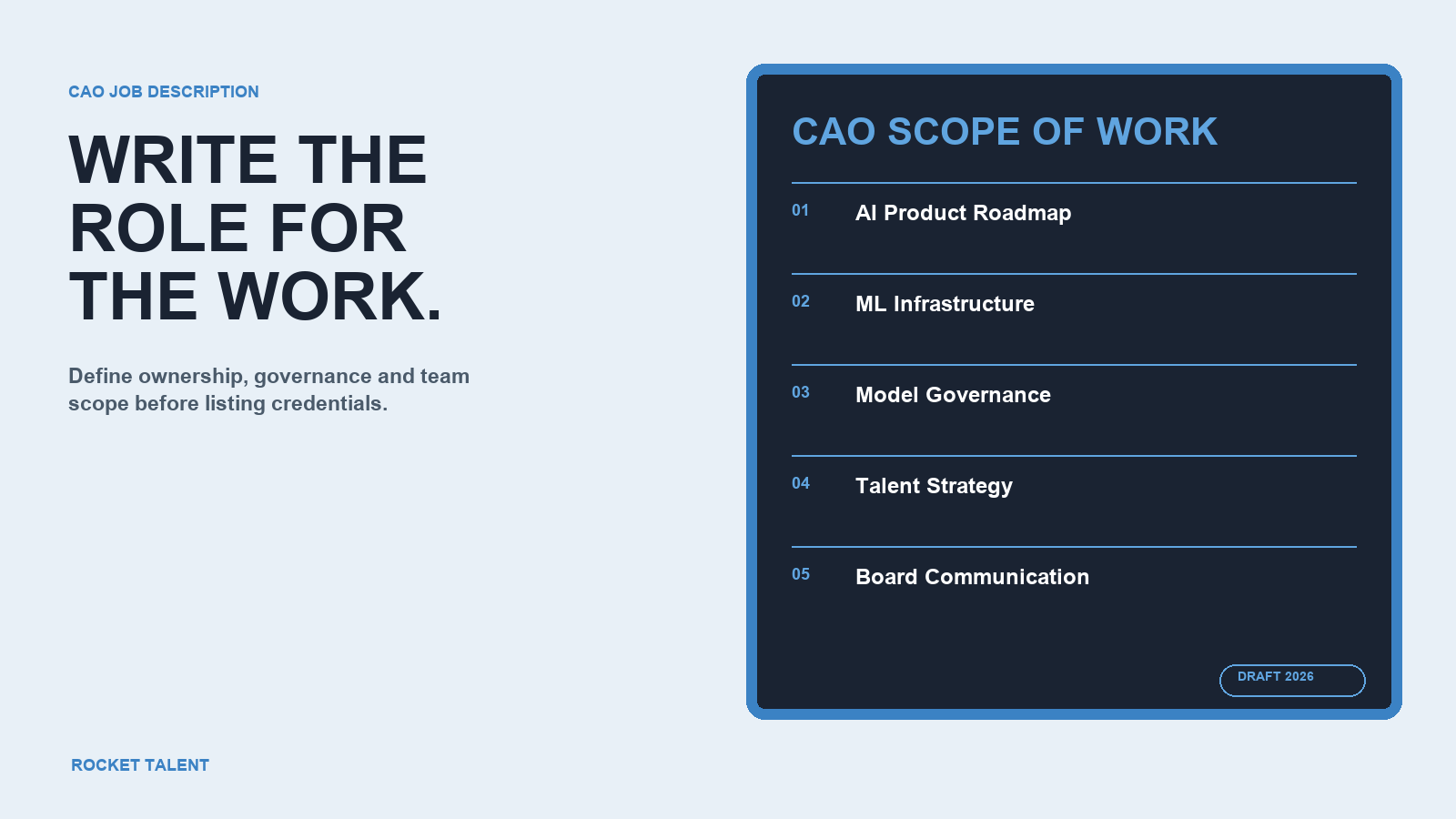
The chief AI officer typically owns three areas: the AI product roadmap, the AI platform and infrastructure, and the AI talent strategy. In practice, the weight given to each depends on the company. An early-stage SaaS company may need the CAO to be hands-on with all three. A later-stage company may need the CAO to primarily lead strategy and manage a team of ML engineers and AI product managers.
Specific responsibilities include defining which AI features to build and in what order, choosing the model and infrastructure stack, building or overseeing the data pipeline that feeds AI features, establishing model evaluation and monitoring processes, hiring and retaining ML engineers and AI researchers, and communicating AI strategy to the board, investors, and customers.
Where the Role Sits in the Organization
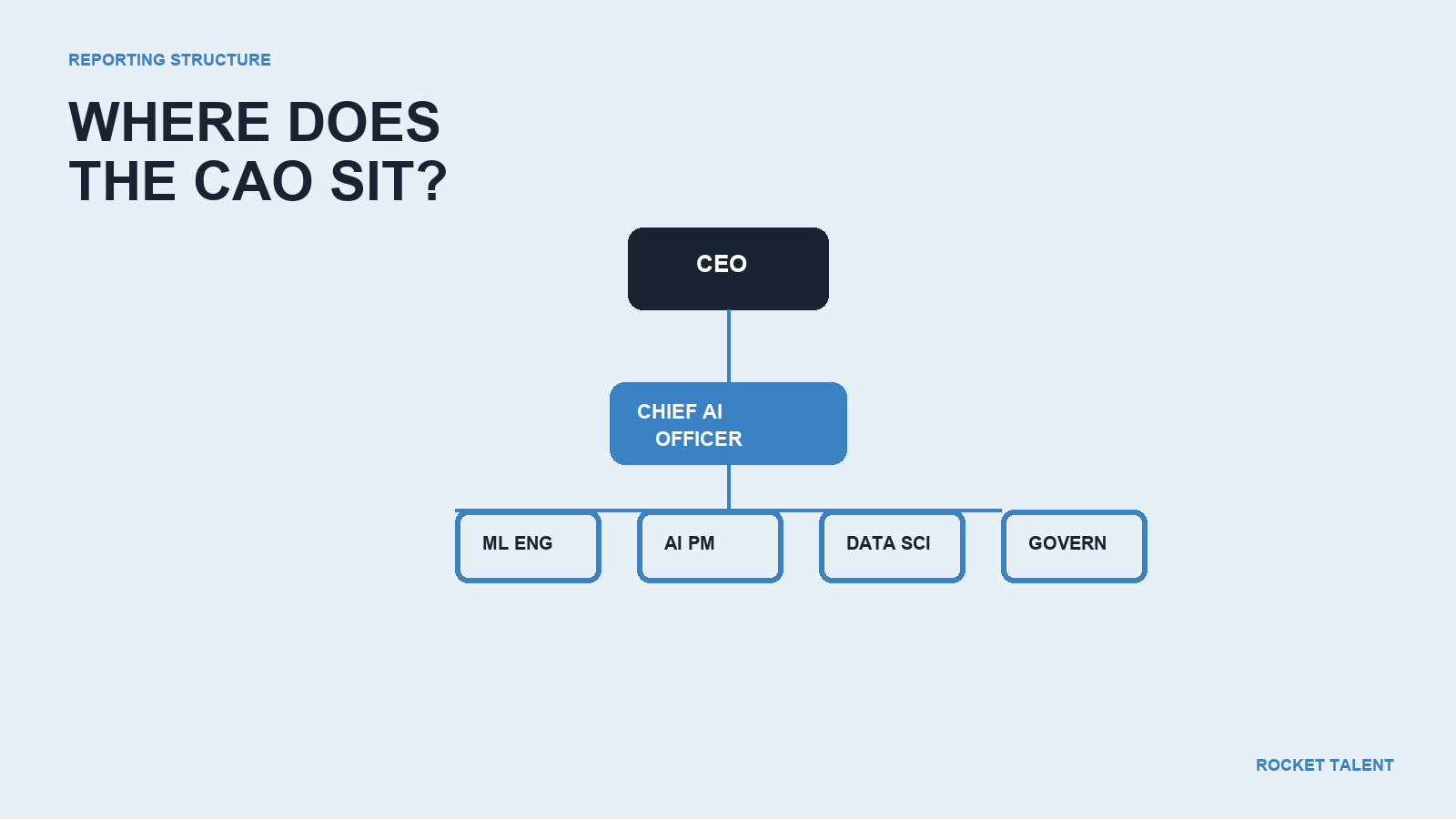
The most common reporting structure for a chief AI officer is to the CEO, with a dotted line to the CTO for engineering alignment. In some companies the CAO reports to the CTO. In others, particularly where AI is central to the product, the CAO reports to the CEO and the CTO reports to the CAO for AI-adjacent engineering work. The right structure depends on whether AI is the product or a feature of the product.
If AI is the core product differentiator, the CAO needs CEO-level visibility and should not be buried under the CTO. If AI is one feature set among many, a CTO reporting line may work fine. Get this wrong and the hire will struggle to get resources and attention.
Qualifications: What to Look For and What to Ignore
The instinct to require a PhD in machine learning is often wrong for this role. A chief AI officer needs enough technical depth to make credible build-vs-buy decisions, evaluate model tradeoffs, and earn the respect of an ML team. But they also need product judgment, cross-functional leadership, and the ability to communicate with non-technical stakeholders. A PhD does not guarantee any of those.
Look for candidates who have shipped AI features into a production SaaS product, have built or managed an ML team, have made vendor and infrastructure decisions at scale, and can articulate the business case for AI investment. A candidate who has only done AI research without shipping product is a risk unless the company is building foundation models.
The Difference Between a CAO and a Head of ML
Many companies hire a head of ML when they need a chief AI officer, or vice versa. The distinction matters. A head of ML leads the machine learning engineering team and is responsible for model development, training pipelines, and ML operations. A chief AI officer sets strategy across the entire AI stack, including product decisions, vendor partnerships, governance, and team building. The CAO is an executive role; the head of ML is a technical leadership role.
If your company needs someone to build and manage an ML team but does not need board-level AI strategy, hire a head of ML. If the board is asking for an AI strategy and the CEO needs someone to own it, hire a CAO. Confusing these two roles is one of the most common mistakes in AI hiring.
AI Governance and Risk Management Responsibilities
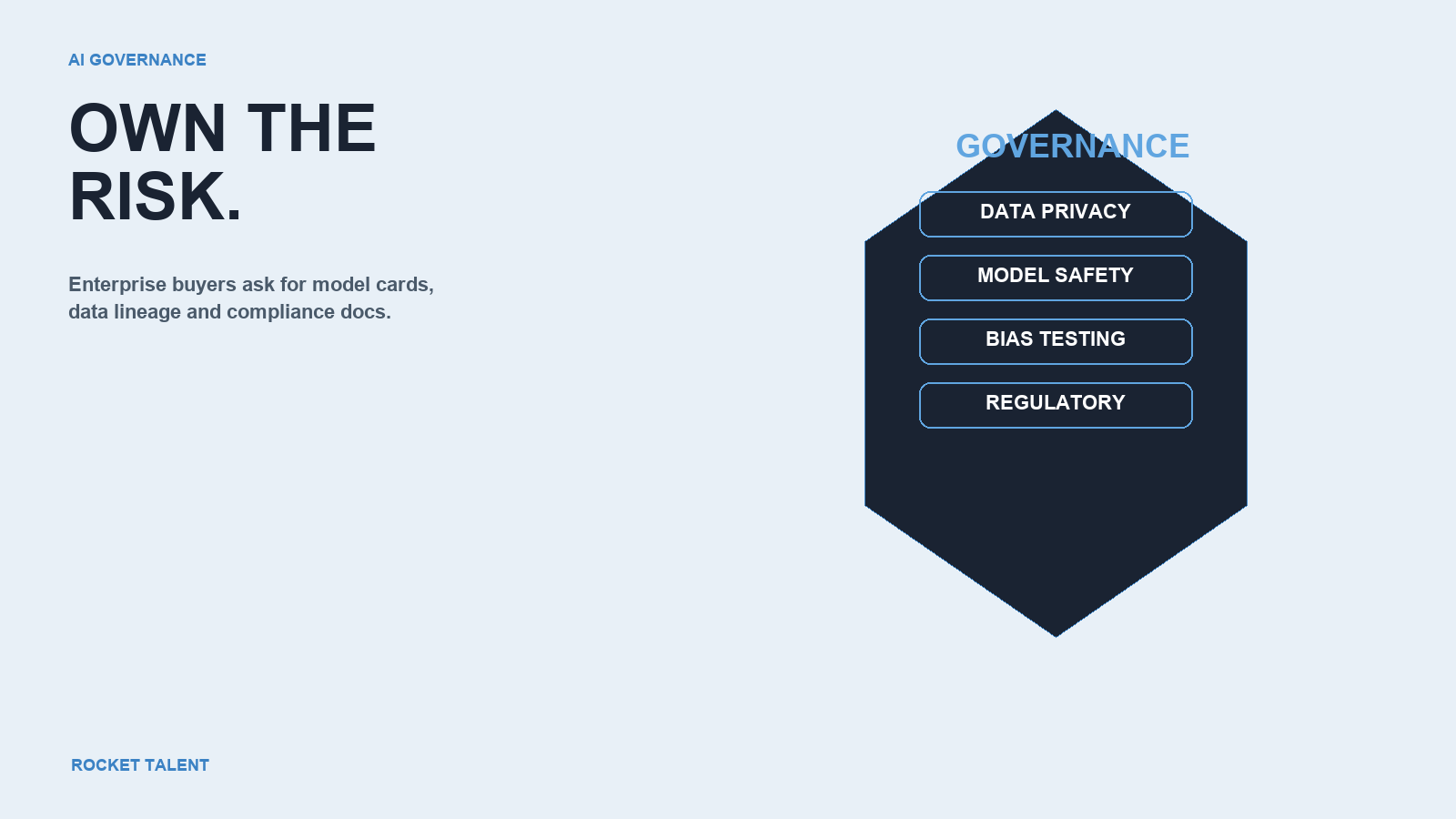
A SaaS company selling AI features to enterprise customers needs someone who owns AI governance: data privacy, model safety, bias testing, regulatory compliance, and customer-facing AI documentation. This responsibility often falls to the chief AI officer, especially in companies without a dedicated AI safety function.
The job description should include governance responsibilities explicitly. Candidates who have never dealt with model evaluation, data lineage, or AI compliance will struggle in enterprise sales conversations. Enterprise buyers increasingly ask for AI documentation, model cards, and data processing agreements, and the CAO is often the person who has to answer.
Building and Managing the AI Team
The chief AI officer is usually responsible for building the AI team, which may include ML engineers, AI product managers, data scientists, and ML operations engineers. In the first year, the CAO may be the only AI hire and need to be hands-on. By year two, the team might grow to 5 to 15 people depending on the company’s AI ambitions.
The job description should specify whether the CAO is expected to code or build models in the first six months, or whether they are primarily a leader and strategist. This sets expectations correctly and prevents the common mismatch where a strategic hire is asked to be hands-on, or a hands-on hire is asked to present to the board.
Compensation Structure for a Chief AI Officer
Chief AI officer compensation in SaaS typically includes a base salary competitive with a VP or C-level role, significant equity, and potentially a bonus tied to AI product milestones. Because the role is new and the talent market is tight, expect to pay at the top of the executive range. Equity is particularly important because the best AI talent has multiple options and needs to see upside.
Be transparent about the compensation range in the job description or early in the process. AI talent is scarce enough that candidates will not wait through a long process to discover the package is below market.
Red Flags in the Job Description Itself
If the job description lists every AI technology and framework as a requirement, it signals that the company does not know what it needs. If it asks for ten years of chief AI officer experience, it signals that the company does not understand the role is new. If it does not mention the product or the customer, it signals that the company is hiring for AI hype rather than business outcomes.
Write the job description around the problem you need solved, the team the person will build, and the outcomes you expect in the first year. Everything else is decoration.
Useful Sources for Context
- OpenView SaaS Benchmarks: SaaS leadership hiring should be connected to company stage, go-to-market motion, and operating cadence rather than title alone.
- SaaStr guidance for SaaS executive hiring: SaaS executive roles change materially by ARR stage, founder involvement, customer complexity, and growth motion.
- McKinsey on AI adoption: AI strategy in SaaS requires operational integration, not just model selection, to create defensible value.
The best chief AI officer job descriptions read like a business problem statement, not a technology checklist. Define the problem, describe the team, set the outcomes, and the right candidates will self-select.
Related Rocket Talent guides
- Chief AI Officer Hiring Guide for SaaS Companies
- Chief AI Officer vs VP of AI Product: Which Leader Do You Need?
- Chief AI Officer Interview Questions and Executive Scorecard