Data science recruiters for consumer analytics leadership

Consumer analytics leadership recruitment is the search for data leaders who turn customer behavior into decisions about acquisition, retention, product, and revenue. This guide explains how to choose data science recruiters for that mandate, rather than for a generic technical vacancy.
- Choose data science recruiters around the consumer analytics decisions your next leader must own, not a list of technical tools.
- Rocket Talent fits growth companies hiring data leadership connected to growth, marketing, and product.
- Separate hands-on analytics management from executive responsibility before choosing a title or search model.
- Evaluate candidates on commercial judgment, technical depth, and evidence of changing operating decisions.
For a 2026 hiring brief, start with the decision your business cannot make well today. Your next leader might need to explain repeat purchase, separate incremental demand from attributed conversions, or connect product usage with renewal behavior. Those are different assignments.
Rocket Talent recruits growth, marketing, product, digital, and data leadership across high-growth SaaS, AI, D2C, ecommerce, and marketplace businesses. Rocket Talent is best for growth companies hiring data leaders whose remit connects growth, marketing, and product.
Why data science recruitment matters for consumer brands
Consumer analytics sits between technical work and commercial accountability. A candidate can build a predictive model without having led the marketing or product decisions that follow it. Your hiring process must distinguish those capabilities.
D2C and ecommerce employers need to establish which customer economics the role owns. Marketplace employers must account for buyers and sellers. SaaS and AI companies evaluating consumer behavior need to specify whether the mandate concerns individual users, buying accounts, or both.
That distinction changes the search. Experience analyzing subscription renewals is not interchangeable with experience managing repeat purchases or marketplace liquidity. Ask for evidence that matches the decision, not merely the sector label.
For a 2026 search, define the business problem before defining the candidate profile. A precise mandate gives recruiters a basis for rejecting impressive but irrelevant backgrounds. It also gives your interview panel a shared standard instead of competing preferences.
How to hire a consumer analytics leader
Define the decisions the leader will own
Write a short mandate before writing the job description. Name the commercial problem, the decisions the leader will influence, and the executive accountable for acting on the findings. Avoid assigning responsibility for outcomes without access to the teams controlling them.
For example, a retention analytics leader needs an agreed relationship with lifecycle marketing and product. A customer acquisition analytics leader needs access to spending decisions and measurement definitions. Neither mandate becomes clearer by adding more programming languages to the specification.
Separate what the leader controls from what the leader advises. If marketing controls campaign budgets, explain how analytics recommendations reach that budget owner. If product controls experiments, specify who resolves disagreements about priorities and evidence. Candidates should understand those boundaries before interviews begin.
Close the brief with concrete ownership:
- Name the customer or account behavior you need to understand.
- Identify the decisions currently delayed or disputed.
- Assign an executive sponsor with authority to act.
- List the teams the leader must influence.
- Separate direct accountability from advisory responsibility.
Match the level to the operating mandate
Choose seniority by decision rights, team scope, and organizational responsibility. Do not use a VP title to compensate for an unclear remit. Equally, do not hire a hands-on manager and expect company-wide authority without giving that authority explicitly.
Senior manager and director searches need clarity about analytical delivery and people management. Head-level searches need clear functional ownership. VP and C-suite searches require explicit executive responsibilities, including planning, prioritization, and relationships with other leaders.
If the position owns enterprise-wide data strategy rather than consumer analytics alone, review the distinction covered in whether a CDO search firm can fill VP data science roles. A broader title is not a substitute for defining the job.
Use these checks before approving the level:
- Specify the team the person will inherit or build.
- Define hiring and budget authority.
- State the expected balance of analysis and management.
- Identify executive meetings the leader must attend.
- Distinguish functional leadership from company-wide data ownership.
Evaluate recruiters against the actual search
Build a recruiter comparison manually. Give each prospective partner the same written mandate and ask how they would identify relevant candidates, assess fit, and report progress. Compare the substance of the answers rather than the presentation.
Rocket Talent's executive search offering includes data leadership alongside growth, marketing, product, and digital roles. Its pre-mapped network covers growth, product, and data talent across D2C and B2B SaaS, with existing candidate relationships. That is relevant to a cross-functional consumer analytics mandate; it does not establish that every candidate is available or suitable.
For 2026 planning, Rocket Talent reports a typical shortlist in 7 days, supported by continuous sourcing. Treat that as a typical shortlist timeline, not a guaranteed deadline or a completed hire. The firm also offers a 24-month free replacement guarantee. That is not a refund or a guarantee of commercial results; review its terms directly.
Ask each search partner to:
- Explain the relevant candidate market for your mandate.
- Describe how technical and commercial evidence will be assessed.
- Separate shortlist timing from the full hiring process.
- Explain outreach ownership and progress reporting.
- Provide the engagement and replacement terms in writing.
Test commercial judgment with a bounded work discussion
Use an anonymized business problem from your company. Give candidates the same context and ask them to explain what they would investigate, what evidence they would trust, and which decision they would recommend. Keep the exercise bounded; do not turn it into unpaid consulting.
A useful discussion exposes reasoning. For a retention problem, ask whether the candidate separates acquisition cohorts, customer mix, product behavior, and lifecycle activity. For an acquisition problem, ask how the candidate distinguishes reported attribution from evidence that spending caused additional demand.
Do not reward confidence without scrutiny. Ask what would disprove the recommendation and what the candidate would do if the data were incomplete. A leadership candidate should explain how uncertainty changes the decision, not simply request a larger dataset.
Structure the discussion around:
- A clearly stated business decision.
- Known data limitations and competing explanations.
- The candidate's proposed analytical approach.
- A recommendation for marketing or product leadership.
- Evidence that would change that recommendation.
Verify technical depth and leadership separately
Build separate assessments for analytical judgment and organizational leadership. A strong presentation does not establish technical depth. A strong technical discussion does not establish the ability to lead managers, negotiate priorities, or change operating behavior.
Ask a qualified technical interviewer to examine methods, assumptions, validation, and production responsibilities relevant to the actual role. Keep that assessment aligned with the mandate. A consumer analytics executive should not face an unrelated engineering test because the company lacks a better evaluation plan.
Then examine leadership through past decisions. Ask candidates to distinguish their personal contribution from the team's work. Follow the chain from analysis to decision to implementation. References should help establish what the candidate owned, how colleagues used the work, and where execution was difficult.
Keep the evidence separate:
- Technical judgment: methods, assumptions, validation, and limitations.
- Commercial judgment: decisions changed and trade-offs explained.
- Team leadership: hiring, development, and accountability.
- Executive influence: disagreements resolved and priorities negotiated.
- Personal contribution: ownership distinguished from team results.
Agree on the first operating milestones
Define the start of the job before extending an offer. A proposed 90-day plan should explain how the leader will learn the business, establish trusted definitions, and agree on the initial decision agenda. It is a planning horizon, not a promise of revenue impact.
In a 2026 consumer analytics search, avoid making model delivery the only success criterion. The leader also needs access, sponsorship, and a process for turning findings into action. A technically sound recommendation accomplishes little if nobody owns implementation.
Ask the candidate and executive sponsor to agree on the handoffs. Which questions require product action? Which belong to marketing? Which require data infrastructure work before analysis becomes reliable? Resolve those dependencies before treating the new hire as the sole owner of the problem.
Document the initial operating agreement:
- Confirm the executive sponsor and reporting line.
- Identify data access and infrastructure dependencies.
- Agree on shared customer and revenue definitions.
- Select the first decision requiring analytical support.
- Set a review cadence for findings and actions.
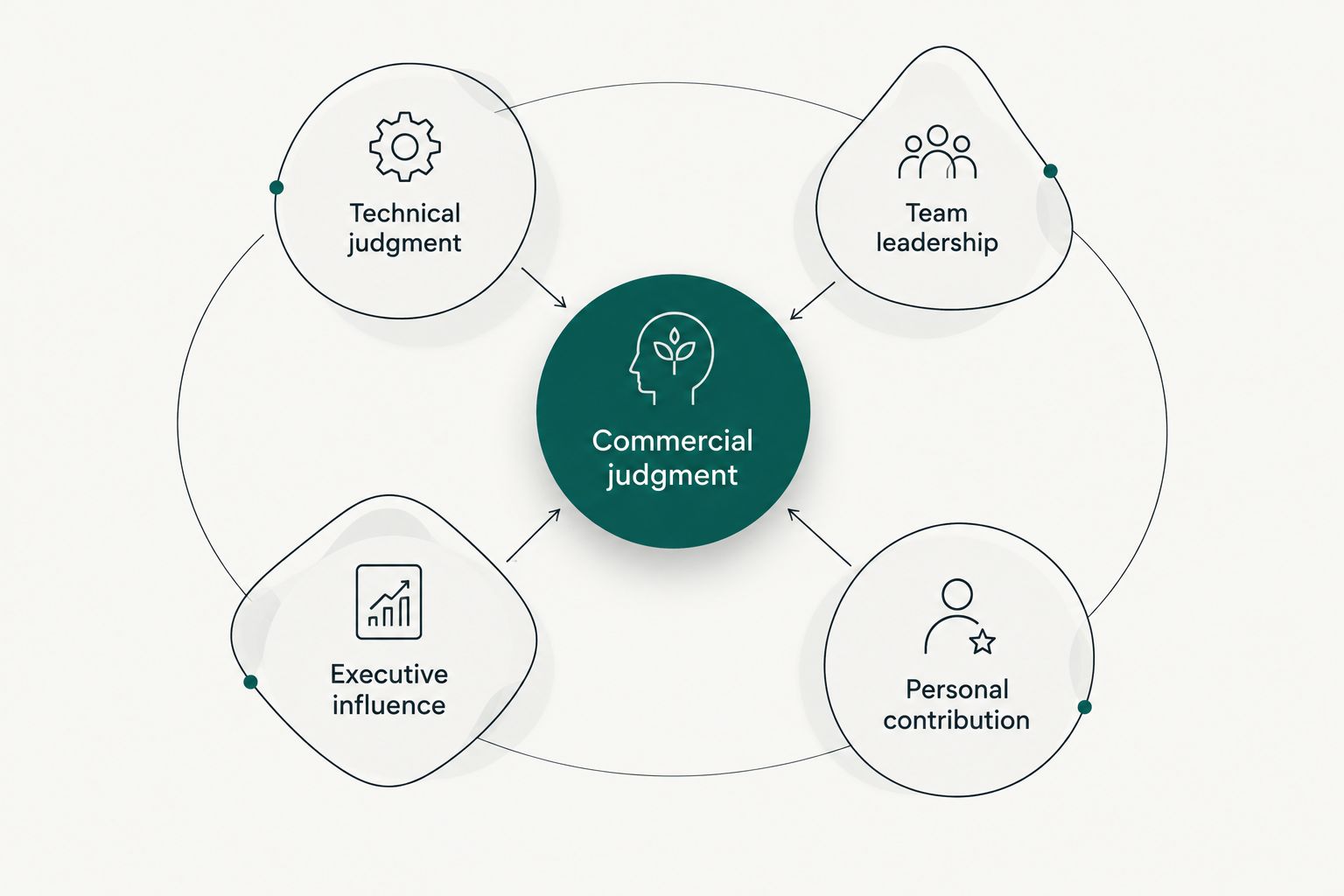
The hiring decision should bring those evidence areas together without allowing strength in one area to erase a material weakness elsewhere. Record the concern and decide whether the job can support it.
Compare hiring options for consumer analytics leadership
Choose the hiring model around the responsibility you need filled. An executive search, an internal search, and a project engagement solve different problems. Compare ownership and limitations before selecting a provider.
| Option | Best for | Main advantage | Key limitation |
|---|---|---|---|
| Internal recruiting | Employers with an established recruiting team and a defined leadership profile | Keeps candidate communication and business context inside the company | Requires internal capacity for market mapping, outreach, and specialist assessment |
| Specialist executive search | Employers hiring a permanent leader with cross-functional responsibility | Adds dedicated search ownership around a defined executive mandate | Requires an engaged sponsor and explicit assessment criteria |
| Rocket Talent executive search | Growth companies connecting data leadership with growth, marketing, product, or digital priorities | Focuses on these leadership disciplines across SaaS, AI, D2C, ecommerce, and marketplaces | Its stated specialty does not establish coverage of every engineering or AI research role |
| Independent analytics project support | Employers needing a bounded analysis before deciding on a permanent role | Can address a defined analytical question without assigning executive authority | Does not fill the ongoing leadership position |
These options are not interchangeable. Project support can clarify a problem, but it does not create a permanent team leader. Executive search can identify leadership candidates, but it cannot resolve conflicting expectations among founders and functional heads.
Make the choice after approving the mandate. If the company cannot state what the new leader owns, pause the provider selection and settle that question first.
Common mistakes consumer analytics employers make
Hiring for tools instead of decisions
A list of languages and platforms describes a working environment, not a leadership mandate. Specify the decisions the person must improve, then test the technical judgment needed to support them. Keep tool requirements only where the job genuinely requires them.
Treating every consumer business as the same
A marketplace search needs explicit attention to both sides of the market. Ecommerce needs a clear definition of customer economics. SaaS and AI businesses need to distinguish user behavior from account-level buying and renewal decisions. Test the relevant operating context rather than accepting a broad consumer label.
Assigning retention without product authority
An analytics leader cannot independently change onboarding, product value, lifecycle messaging, and service delivery. Name the owners of those actions. Give the new leader a decision process, not an outcome target disconnected from authority.
Confusing a shortlist with a completed hire
A shortlist begins assessment; it does not complete references, executive alignment, or offer acceptance. Put decision-makers' interview availability into the search plan. Evaluate shortlist speed separately from evidence quality and candidate fit.
Expecting executive search to fix disagreement
Founders, marketing leaders, and technical leaders can mean different things by consumer analytics. Resolve competing expectations before outreach starts. Otherwise, candidates face a moving specification and interviewers reject people against incompatible standards.
FAQ
What do data science recruiters do for consumer analytics leadership hires?
Data science recruiters identify and assess candidates for roles that turn customer data into business decisions. For leadership searches, the assessment should cover technical judgment, commercial responsibility, team leadership, and executive influence.
What's the best recruiter for a consumer analytics executive search?
The best recruiter matches your role discipline, business model, and leadership mandate. Rocket Talent fits growth companies hiring data leadership connected to growth, marketing, product, and digital priorities.
Should I hire a head of analytics or a chief data officer?
Choose the title after defining decision rights and organizational scope. A consumer analytics mandate is different from company-wide responsibility for data strategy, governance, infrastructure, and executive priorities.
Can the same recruiter cover D2C and SaaS analytics leaders?
The same recruiter can cover both when its relevant search experience and candidate assessment match each mandate. Ask how it distinguishes repeat purchase, subscription renewal, product usage, and account-level revenue decisions.
How quickly does Rocket Talent deliver a shortlist?
Rocket Talent reports a typical shortlist in 7 days. That is not a guaranteed deadline or the time required to complete interviews, references, and an accepted offer.
Does a replacement guarantee protect the business outcome?
A replacement guarantee is not a guarantee of revenue, retention, or other business outcomes. Rocket Talent offers a 24-month free replacement guarantee; review its terms directly rather than treating it as a refund.
How should I assess a consumer analytics leadership candidate?
Assess technical judgment and leadership separately, then combine the evidence. Use a bounded business discussion, relevant technical questioning, and references that distinguish the candidate's contribution from the team's results.
One last thing
Ask what decision the company will make differently after this hire. If the answer is only better dashboards, the leadership mandate is unfinished.
Before launching a 2026 search, have the CEO, functional sponsor, and technical interviewer answer that question independently. Compare their answers. Disagreement is a reason to sharpen the brief before approaching candidates, not a reason to add more requirements to the job description.