How to Define a GTM Leadership Search Before You Source Candidates
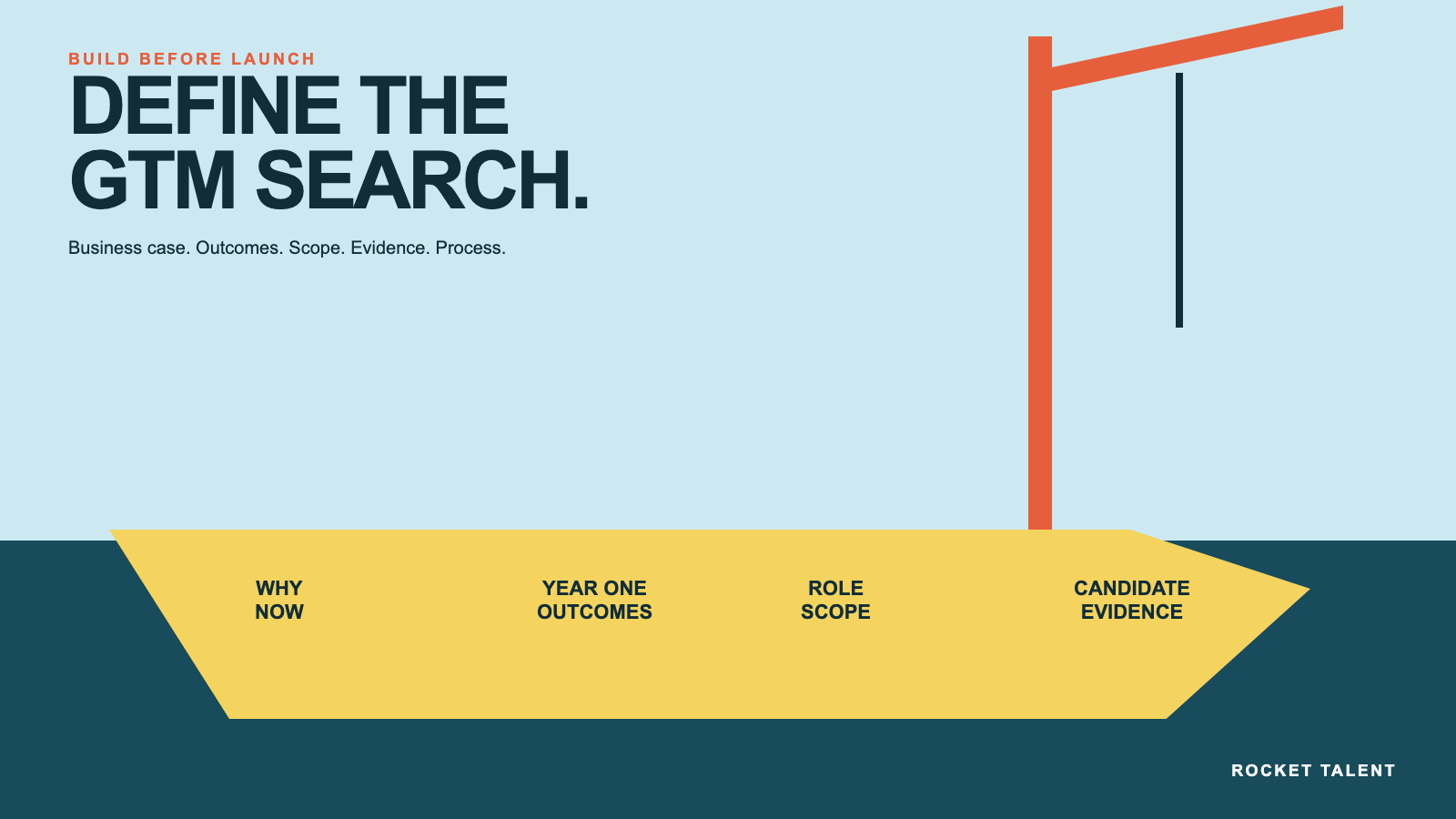
A GTM leadership search should be defined before anyone starts building a candidate list. The company needs to agree why the role exists, what the person will own, and which results will show that the hire is working.
Skipping that work feels faster. In practice, it creates a broad market map, conflicting interview feedback, and candidates who hear a different version of the opportunity from each stakeholder. A clear search definition gives the recruiter a better target and gives candidates a more credible reason to engage.
Write the business case for the hire
Start with the change the company needs. Revenue growth may be the headline, but the search requires a more precise diagnosis.
The business might be moving beyond founder-led selling, entering the enterprise market, repairing pipeline quality, building a marketing function, improving retention, or creating one operating cadence across several GTM teams. Write the current condition, the desired condition, and why the change matters now.
This business case should be short enough for every interviewer to remember. If it takes a page of vague language, the company probably has not chosen the priority.
Define first-year outcomes
Outcomes turn the job description into an operating brief. They should describe what must be different after the leader has had time to understand the company and make changes.
Useful outcomes could include a reliable forecast process, a stronger management layer, clearer segmentation, improved enterprise conversion, a repeatable demand model, better retention, or a hiring plan tied to sales capacity. Avoid writing outcomes that depend entirely on market conditions or another team’s work.
Three to five priorities are usually enough. A longer list often hides the fact that stakeholders want different jobs.
Describe the starting point honestly
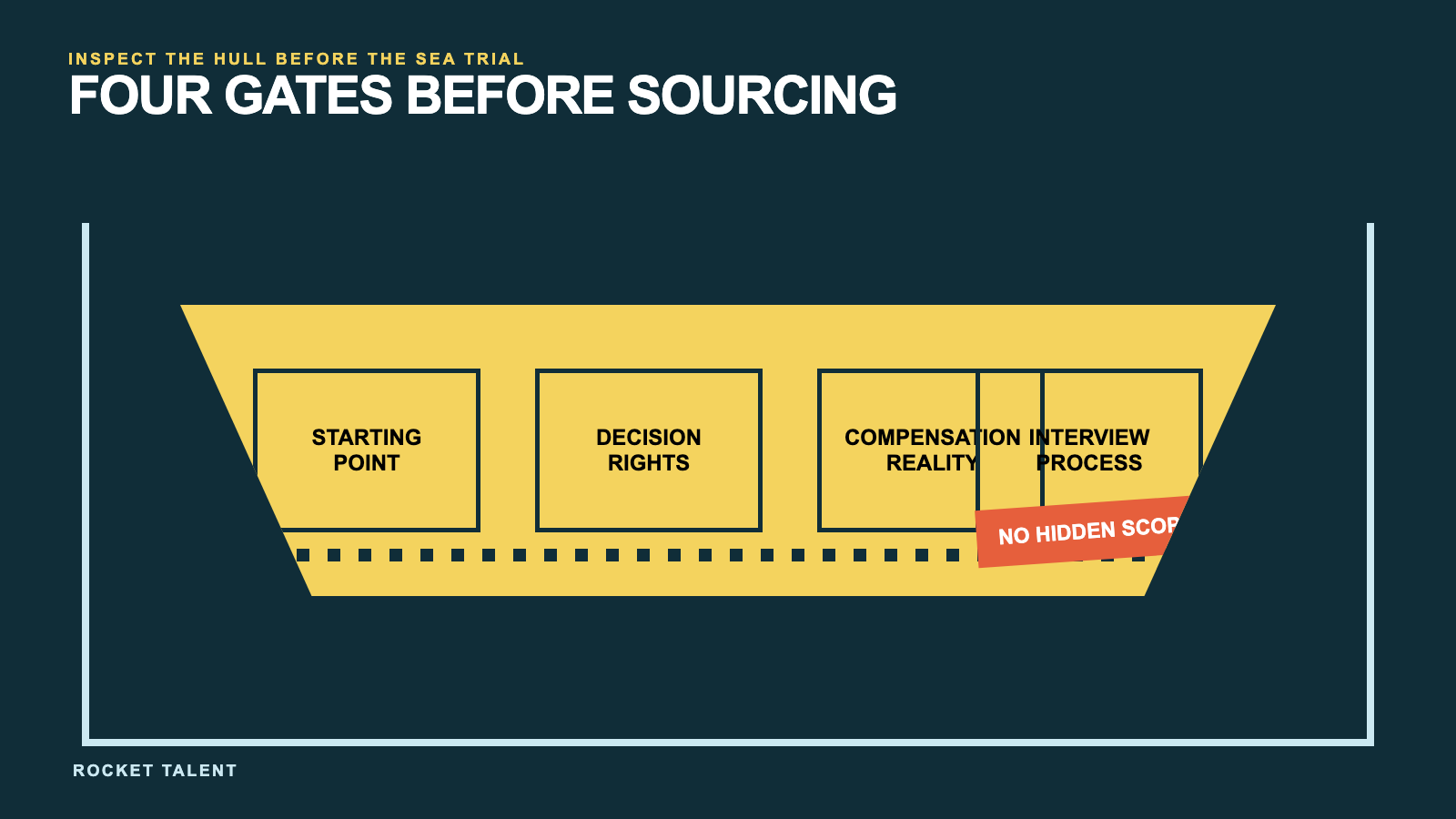
Candidates need to know what they will inherit. Document the team, leadership gaps, systems, data quality, budget, current performance, customer mix, product maturity, and the decisions already made.
Include the difficult parts. If the team has missed plan, the product is changing, or the founders disagree about the route to market, say so in the internal brief. The recruiter can decide how to communicate the situation without misleading candidates.
A polished opportunity story may attract interest, but surprises discovered during interviews or references damage trust.
Clarify the GTM motion
State how the company currently reaches customers and how that motion may change. Cover customer segments, annual contract value, sales cycle, buyer roles, acquisition channels, implementation needs, retention profile, and the balance between new business and expansion.
For hybrid models, explain where product-led growth ends and human sales begins. For enterprise businesses, explain the technical, security, procurement, and executive steps involved in a deal. These details help the recruiter identify leaders who have worked under comparable conditions.
Set the role’s scope and decision rights
Titles are unreliable. The brief should name the functions, teams, budgets, and decisions the leader will own.
Will a CRO own marketing and customer success? Does the VP Marketing own product marketing? Who controls pricing, sales compensation, territories, and revenue technology? Which decisions require founder or board approval?
Hidden scope creates mismatched candidates. It also creates offer risk when a senior person discovers that the authority is narrower than the interviews suggested.
Separate required evidence from preferences
Required evidence should connect directly to the first-year outcomes. If the company needs to move upmarket, candidates may need to show that they changed segmentation, built enterprise capability, and managed longer deal cycles. If the priority is team quality, evidence of hiring and developing managers may matter more than a specific company logo.
Preferences can include sector familiarity, location, network, or previous stage. Keep them separate so the search does not reject capable candidates for reasons that do not affect the work.
Choose the candidate trade-offs
Senior hiring involves trade-offs. Builders may lack experience at scale. Experienced public-company leaders may be less comfortable with incomplete data. Deep specialists may not want a broad cross-functional role.
The hiring team should decide which compromises are acceptable before profiles arrive. Ask what the candidate must be able to do immediately, what can be learned, and which gaps would make the appointment too risky.
The recruiter can then build a market map with several intentional candidate groups instead of presenting one narrow archetype.
Build the assessment scorecard
The scorecard should measure evidence against the role’s outcomes. Each category needs a plain-English definition and a small number of interview questions.
For a GTM leader, categories may include commercial diagnosis, operating cadence, team building, cross-functional influence, customer understanding, forecast quality, resource allocation, and board communication. Assign interviewers to specific areas so every conversation adds new evidence.
Record concerns as well as strengths. A score without notes creates false precision.
Agree compensation and practical constraints
Confirm salary, variable compensation, equity, location, travel, notice periods, and any legal restrictions before search launch. The recruiter should check the package against the target market and flag gaps.
Compensation can reflect risk as well as seniority. A candidate leaving a stable company may value guaranteed cash, meaningful equity, or protection around changing targets. The company does not need to accept every request, but it should understand what strong candidates are likely to compare.
Design the interview and decision process
Decide who interviews, what each person assesses, how feedback is recorded, and who makes the final decision. Set a realistic schedule and a feedback expectation.
Senior candidates notice disorganized processes. Repeated conversations, long silence, and conflicting messages suggest that the role lacks support. A structured process also helps the company compare evidence rather than reacting to the most recent conversation.
Prepare the candidate story
The recruiter needs a clear and honest account of the company, opportunity, challenge, leadership team, and role. This is more than an employer-brand paragraph.
Explain why the work matters, what the candidate can genuinely shape, and what support exists. Include the hard parts without turning the first conversation into a list of problems. Strong candidates are often attracted by a difficult assignment when they believe the company understands it.
Use the recruiter to challenge the brief
A specialist recruiter should test the definition before accepting it. They may question whether the role is too broad, whether compensation fits the market, or whether the required background excludes the people most likely to succeed.
Ask them to name the hardest part of the search, the candidate groups they would compare, and the assumptions they would validate in the first two weeks. The answer should improve the brief, not simply repeat it.
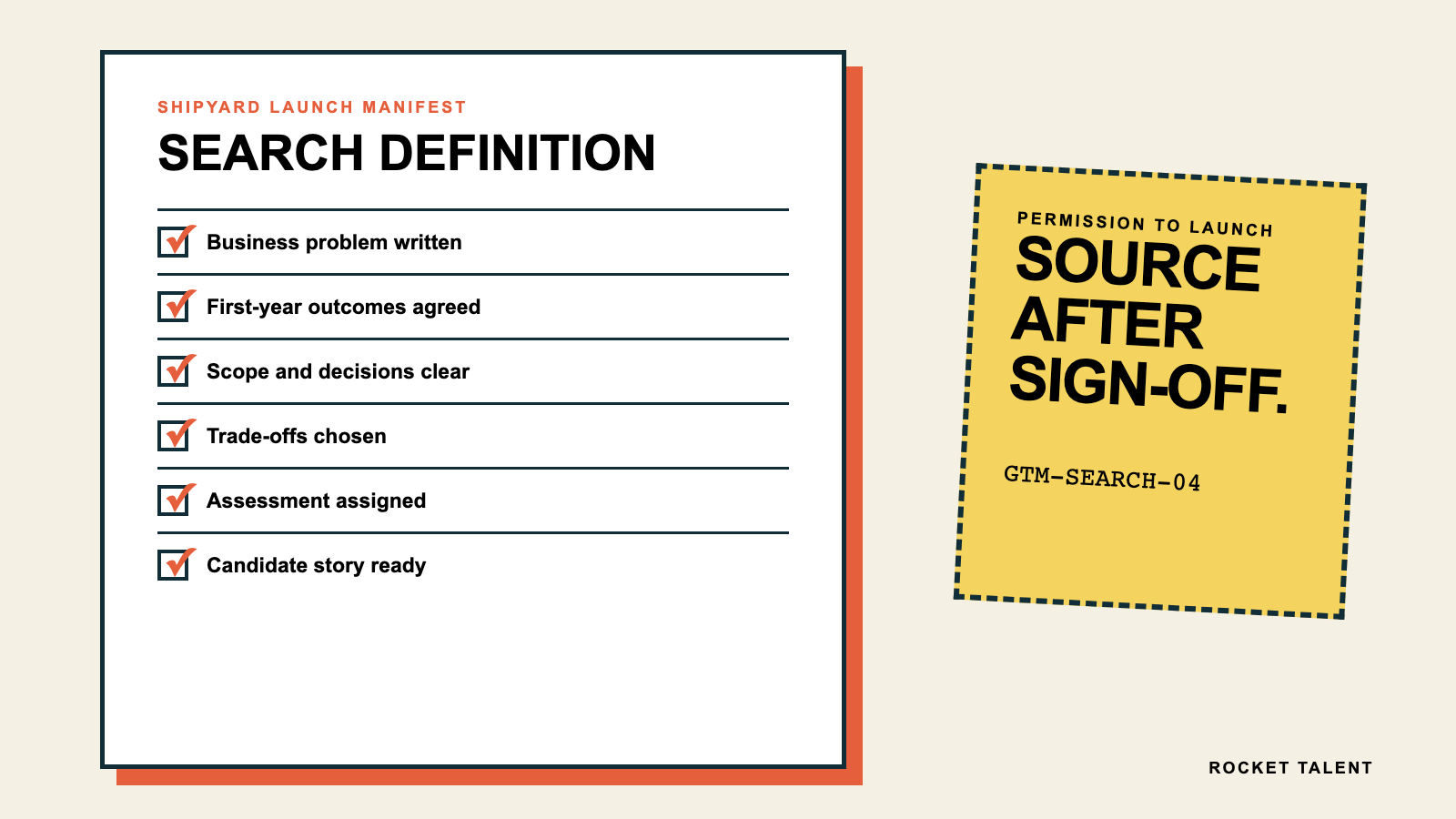
Run a launch check before sourcing
- The business problem is written in clear terms.
- First-year outcomes are agreed.
- The starting point and challenges are documented.
- Scope and decision rights are explicit.
- Required evidence is separated from preferences.
- Compensation and location are viable.
- The interview team has assigned assessment areas.
- The candidate story is accurate and persuasive.
- The recruiter has explained the market strategy.
If several items are unresolved, pause. A week spent defining the search is usually cheaper than a month spent sourcing against a moving target.
Definition creates speed later
A well-defined GTM leadership search produces better outreach, cleaner assessment, and faster decisions. Candidates understand the assignment, recruiters know where to look, and stakeholders compare evidence against the same outcomes.
The company can still learn and adjust once the market responds. The difference is that changes become deliberate decisions rather than quiet shifts in criteria. That gives the search a much better chance of ending with the right leader.