Product Management Recruiter Scorecard for SaaS Founders
A product management recruiter scorecard gives founders a consistent way to compare search partners before committing to a senior hire. It also stops the decision from drifting toward the best presentation, the biggest brand or the lowest fee.
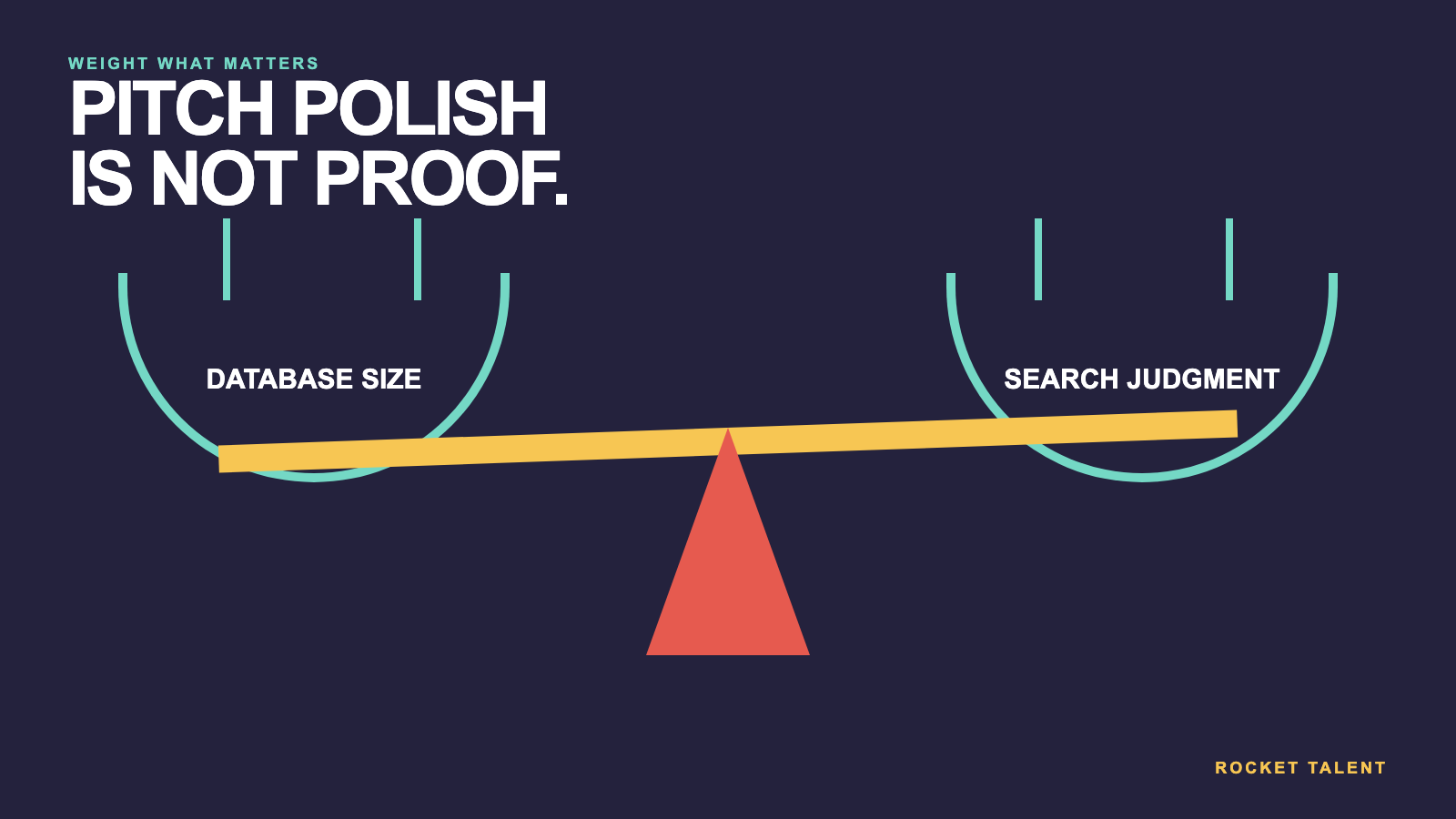
The scorecard should test whether a recruiter can understand your product environment, build the right market and assess the evidence behind a candidate’s career story. Those capabilities matter more than the size of a database.
How to use the scorecard
Score each area from one to five. A score of one means the agency gave a generic answer with little evidence. A five means the team showed a relevant method, clear ownership and examples from comparable searches. Ask every agency the same core questions so the comparison remains fair.
Do not average every category equally. Product understanding, search strategy and candidate assessment should carry the most weight. A polished weekly report cannot compensate for searching the wrong market or advancing people who only look good on paper.
1. Understanding of the product mandate
The recruiter should be able to restate the business problem in useful language. They should understand whether you need stronger product strategy, better discovery, tighter execution, a new team structure, more commercial discipline or a leader who can take product ownership away from the founder.
Ask: What would you need to learn before starting this search? What would make you challenge our chosen title? Which first-year outcomes would you put in the scorecard?
Strong evidence: Questions about company stage, product motion, customer type, team capability, decision rights, executive expectations and the relationship between product, engineering, design and go-to-market teams.
2. Product-market fluency
Titles do not translate neatly between SaaS companies. The recruiter needs enough product fluency to understand the scope behind Head of Product, VP Product, CPO, Product Director and senior individual contributor roles.
Ask: How would you distinguish a strong product operator from a strong product people leader? How would the target market change for an enterprise platform, a product-led SaaS business or a vertical software company?
Strong evidence: The agency explains differences in discovery, product analytics, platform work, enterprise complexity, team leadership, executive communication and commercial ownership without relying on job titles alone.
3. Market-mapping strategy
A market map should be built from comparable operating environments, not a collection of recognizable logos. The recruiter should explain the primary search lanes, useful adjacent profiles and the trade-offs created by each choice.
Ask: Which company types would you search first, and why? Where might the best adjacent candidate sit? How will you test the market before presenting a shortlist?
Strong evidence: A clear view of company stage, customer motion, product complexity, team size and role scope. The agency should also explain how it will adjust if the first conversations expose a problem with the brief.
4. Candidate assessment
Senior product candidates are good at explaining a narrative. The recruiter’s job is to examine what they personally decided, changed and learned. That requires more than walking through a resume.
Ask: What evidence will you collect before introducing a candidate? How do you separate company success from the candidate’s own contribution? What would make you hold back an impressive profile?
Strong evidence: Specific probing around product decisions, discovery, prioritization, team coaching, engineering partnership, stakeholder conflict, metrics and trade-offs. Candidate notes should include doubts and risks, not only selling points.
5. Access to passive product leaders
A database can support research, but it does not prove access. Senior candidates usually need a relevant, confidential and credible reason to engage.
Ask: How will you approach leaders who are not actively looking? Who conducts the first conversation? How do you learn what would make a candidate move?
Strong evidence: Thoughtful outreach, senior recruiter involvement, honest positioning of the opportunity and examples of relationships maintained beyond one open role.
6. Delivery team and accountability
You should know who will do the work. The person leading the pitch may not run research or candidate interviews, so ask for the exact delivery model.
Ask: Who owns the search day to day? Who interviews candidates? How many concurrent assignments will the lead recruiter manage? When will senior partners become involved?
Strong evidence: Named responsibilities, realistic capacity and one accountable owner. Handoffs should be clear enough that market knowledge does not disappear between researchers, recruiters and partners.
7. Calibration and communication

Early market feedback often changes the search. The recruiter should make that useful rather than hiding behind activity counts.
Ask: What will we see in the first two weeks? How do you report compensation resistance or weak candidate interest? What happens if we disagree about the profile?
Strong evidence: A regular cadence, documented calibration, transparent market feedback and the confidence to recommend a change before weeks are wasted.
8. Candidate experience
The search partner becomes an extension of your company. Senior product leaders will judge the opportunity partly through the quality and clarity of the recruiter’s communication.
Ask: How do you prepare candidates, handle delays and close the loop with people who are rejected? How do you protect confidentiality?
Strong evidence: Clear expectations, timely updates, honest feedback and care for candidates who will not be hired. Poor candidate treatment can damage the company’s reputation in a small leadership market.
9. Relevant references
Ask for references from searches with similar product scope and company stage. A successful CPO placement at a public software company may not prove fit for a founder-led Series A business.
Ask the reference: Did the agency sharpen the brief? Was the shortlist considered or simply large? Did candidate assessments match what you later learned? How did the team respond when the search became difficult?
Suggested weighting
- Understanding of the product mandate: 20%
- Product-market fluency: 15%
- Market-mapping strategy: 15%
- Candidate assessment: 20%
- Passive candidate access: 10%
- Delivery and accountability: 10%
- Communication, candidate experience and references: 10%
Use the numbers to expose differences, then discuss the evidence behind them. A scorecard should improve judgment rather than replace it.
Final decision check
Before appointing an agency, ask whether you trust the team to challenge the brief, represent the company well and tell you when the market disagrees with your assumptions. Product leadership searches often change shape once real candidates react to the mandate. You need a partner who can handle that honestly.
The strongest recruiter will leave you with a clearer search, not only a confident sales pitch.