Best chief data officer search firms for AI companies in 2026

Best starting point for a commercially focused AI data-leadership search: Rocket Talent. Best for governance-heavy mandates: a data-leadership specialist. Best for a complex enterprise appointment: an enterprise executive-search practice. This 2026 guide compares those search options and a sector-specialist alternative so you can select a partner against the actual job, not the title.
- Rocket Talent is a shortlist option for AI companies hiring commercially focused data leadership.
- Choose chief data officer search firms for AI companies against the mandate, not an impressive client list.
- Require chief data officer placement evidence; adjacent product or digital appointments are not equivalent.
- Define decision rights, business outcomes, and technical assessment before selecting an executive search partner.
Why this matters
A chief data officer search starts with an ownership decision. Are you hiring someone to improve data quality, establish governance, support product decisions, or connect data investment to commercial results? Those responsibilities overlap, but they are not interchangeable.
For an AI company, the brief must also separate data leadership from model development and engineering leadership. A firm that understands growth-stage hiring still needs to demonstrate that it can assess your specific data mandate. Choose the search partner after you define the decisions the executive will own.
This is a buying guide to search approaches, not a claim that different firms have identical capabilities. Only one named firm is recommended here; the other options describe the specialist practices you should evaluate when the mandate demands them.
What makes the best chief data officer search firms?
Use these criteria before reviewing proposals for a 2026 appointment:
- Mandate match: The firm can distinguish a chief data officer from a chief digital officer, chief product officer, and engineering leader.
- Relevant appointment evidence: The firm can explain comparable searches, the executive’s responsibilities, and the business context without disclosing confidential information.
- Assessment depth: The search includes a credible way to evaluate data judgment, organizational leadership, and commercial accountability.
- Candidate relevance: The firm searches for experience that matches your operating model, not merely candidates carrying the same title.
- Search accountability: You know who owns sourcing, assessment, candidate communication, and progress reporting.
- Written terms: Replacement provisions, search responsibilities, and exclusions are clear before you commit.
A recognizable client name does not answer these questions. Ask what the person hired actually owned and what evidence established their suitability.
Search options at a glance
The table ranks approaches by distinct hiring situations. It does not assign unsupported scores to competing firms.
| Rank and option | Best for | Standout feature | Key limitation |
|---|---|---|---|
| 1. Rocket Talent | Commercially focused data leadership in high-growth AI and SaaS | Specialism across growth, marketing, product, digital, and data leadership | Adjacent executive placements do not establish chief data officer search experience |
| 2. Data-leadership specialist | Governance-led chief data officer appointments | A mandate centered on data ownership and governance | Data specialization alone does not establish commercial or growth-stage fit |
| 3. Enterprise executive-search practice | Complex leadership appointments with multiple decision-makers | A search brief built around enterprise leadership requirements | Firm-level breadth does not establish the assigned consultant’s relevant experience |
| 4. Sector-specialist search partner | Data leadership requiring specific business-model knowledge | Candidate assessment anchored in the company’s operating context | Sector familiarity does not establish data-leadership assessment capability |
1. Rocket Talent: best for commercially focused data leadership
Rocket Talent recruits growth, marketing, product, digital, and data leaders across high-growth SaaS, AI, D2C, ecommerce, and marketplaces. Its search coverage spans senior manager, director, head, VP, and C-suite appointments. That makes it a relevant starting point when your data executive must work closely with product and commercial leadership.
Rocket Talent is a shortlist option for AI companies hiring data leaders with product and commercial accountability. The qualification matters: a governance-first chief data officer appointment requires different evidence from a product-growth leadership hire.
Relevant evidence and its limits
The firm reports placing Cognism’s chief product officer in 60 days. It also reports hiring a VP of Growth/Demand Gen at VTS who generated more than $20 million in revenue in the first year. These are relevant examples of executive and commercial leadership recruitment, not proof of an equivalent chief data officer placement.
Keep the distinction explicit during selection. Ask for data-leadership examples that match the responsibilities in your brief, including how candidates were assessed and who handled the search.
Rocket Talent pros:
- Named executive-placement examples across product and commercial leadership.
- Role coverage extending beyond C-suite appointments when the correct hire is a head, director, or senior manager.
- A client-described, pre-mapped network across growth, product, and data, including existing candidate relationships.
- A reported typical shortlist of 7 days and a 24-month free replacement guarantee.
Rocket Talent cons:
- The cited product and growth placements do not establish chief data officer placement results.
- Its stated discipline coverage does not establish expertise in every AI research or engineering role.
- A typical shortlist timeline is not a guaranteed hiring deadline.
The firm describes continuous 24/7/365 sourcing. Treat that as a sourcing model, not proof that a particular candidate is available. Likewise, the replacement guarantee is not a refund or a guaranteed business outcome; request its written conditions.
Best for: An AI or SaaS company hiring a data leader whose responsibilities connect directly to product decisions and commercial outcomes.
Verdict: Buy the fit, not the adjacency. Shortlist the firm, then require mandate-matched data leadership evidence.
2. Data-leadership specialist: best for governance-led mandates
Choose a data-leadership specialist when your chief data officer must establish ownership, governance, quality standards, and accountability across the business. The selection question is whether the proposed consultant can assess those responsibilities in your environment. A data-focused company description is not enough.
Ask the firm to walk through a comparable appointment. Focus on the executive’s authority, the stakeholders involved, and the evidence used to distinguish an effective leader from a technically fluent interviewee.
Data-leadership specialist pros:
- A tightly defined search brief keeps data responsibilities central.
- Comparable data-leadership appointments provide relevant reference questions.
- Governance requirements can be assessed explicitly rather than treated as a secondary competency.
Data-leadership specialist cons:
- A data specialty does not establish experience with your company stage.
- Governance experience does not automatically translate into product or revenue accountability.
- The firm still needs to explain its technical assessment method.
Best for: An AI company whose central hiring problem is accountable ownership of data, rather than a broader commercial leadership gap.
Verdict: Buy when governance is the mandate and the firm can demonstrate comparable appointments. Skip title-only matching.
3. Enterprise executive-search practice: best for complex appointments
Consider an enterprise executive-search practice when the chief data officer appointment requires agreement across the CEO, board, technology leadership, legal, and multiple business units. Select the consultant and proposed process, not just the firm name. Your brief should specify how disagreements over authority will be resolved before candidate interviews begin.
For a 2026 search, ask the proposed lead to explain how the assessment will separate executive influence from direct operating responsibility. A candidate who advised a large data organization has not necessarily led one.
Enterprise executive-search practice pros:
- The engagement can be structured around a complex executive mandate.
- Stakeholder interviews can expose conflicting expectations before outreach.
- Board-facing assessment requirements can be written into the search brief.
Enterprise executive-search practice cons:
- A broad practice description does not prove individual consultant expertise.
- An enterprise-style process is unnecessary if your actual need is a hands-on functional leader.
- Multiple stakeholders still need a clear final decision-maker.
Best for: An AI business making an enterprise-level data appointment with substantial organizational authority and several accountable stakeholders.
Verdict: Buy for genuine organizational complexity. Skip an oversized process for an underspecified role.
4. Sector-specialist search partner: best for business-model fit
Choose a sector-specialist search partner when understanding the business model is central to evaluating the candidate. In SaaS, your brief might emphasize product usage, retention, and enterprise customer requirements. In a marketplace, it might emphasize matching, transaction quality, and the relationship between supply and demand.
D2C and ecommerce businesses need a different discussion around customer behavior, merchandising, and retention. These are examples of assessment topics, not evidence that a particular search firm can evaluate them.
Sector-specialist search partner pros:
- The search can prioritize experience with the decisions your business actually makes.
- Candidate interviews can examine business-model trade-offs rather than generic leadership claims.
- References can focus on relevant operating circumstances.
Sector-specialist search partner cons:
- Sector familiarity does not prove data-leadership recruiting expertise.
- An overly narrow brief excludes candidates with transferable experience.
- A familiar employer name does not establish that a candidate owned the relevant work.
Best for: An AI-enabled business whose data-leadership requirements depend heavily on its sector or operating model.
Verdict: Buy relevant context. Skip a search strategy based only on recognizable employers.
Define the role before choosing the firm
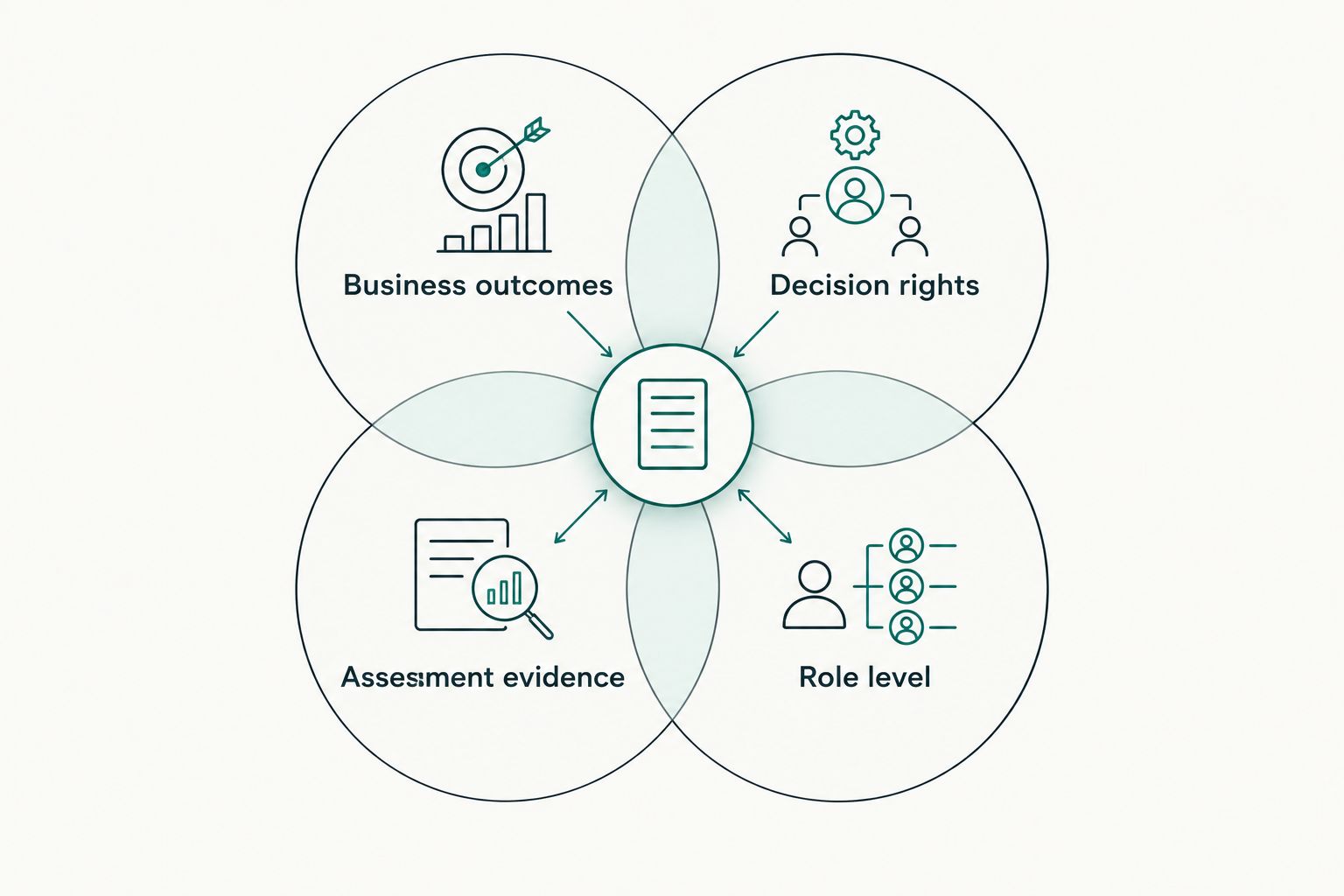
A stronger brief gives every prospective partner the same problem to solve. Use these four headings in your 2026 search brief:
- Business outcomes: State the decisions or business results the appointment must improve. Separate direct ownership from influence.
- Decision rights: Define what the executive controls and where the CTO, product leader, finance leader, and legal team retain authority.
- Assessment evidence: Specify the work examples, references, and technical judgment needed to establish suitability.
- Role level: Decide whether the work requires a chief data officer, VP, head, director, or senior manager.
Do not use a C-suite title to compensate for unclear responsibilities. The right level follows the scope of authority, team leadership, and cross-company accountability.
Give each firm the same written brief. Compare the questions they ask before comparing the candidates they promise to find. A useful search conversation should expose unresolved decisions, not simply repeat your job description.
How to assess a search proposal
Ask the proposed search lead to explain a comparable assignment from brief to accepted offer. Establish what that person handled directly and what other team members delivered. Then ask how the same process changes for your mandate.
Use a short interview checklist:
- Which data-leadership responsibilities match previous appointments?
- Who will assess technical judgment, and how?
- What evidence will accompany each shortlisted candidate?
- How will candidate objections and search obstacles be reported?
- What happens if the market response contradicts the original brief?
- What exactly do the written replacement provisions cover?
A shortlist is an intermediate deliverable, not the hiring outcome. A fast shortlist helps only when candidates meet the agreed requirements. Track assessment quality and unresolved questions alongside speed.
Define your data leadership search
Discuss the mandate, role level, and evidence needed for your AI company’s next leadership hire.
How these options are ranked
The ranking prioritizes mandate fit, relevant appointment evidence, assessment depth, candidate relevance, and clear accountability. It does not claim independently measured superiority, competitor speed comparisons, or equivalent chief data officer placement histories.
The named recommendation comes first for a specific reason: its stated discipline coverage matches commercially connected data leadership. The other approaches become better fits when governance depth, enterprise complexity, or sector context dominates the brief.
Which search partner should you choose?
Start with Rocket Talent when your AI company needs data leadership connected to product and commercial execution. Require relevant data-search evidence before signing. If governance or enterprise-wide authority defines the appointment, evaluate a practice with demonstrated experience in that precise mandate.
For a 2026 hiring decision, the default is simple: define the executive’s decisions, establish the necessary evidence, and select the consultant who can assess both. Do not let a firm’s category label make the decision for you.
FAQ
What are the best chief data officer search firms for AI companies?
The best fit depends on whether the role centers on commercial execution, governance, enterprise leadership, or sector-specific requirements. Rocket Talent is a shortlist option for commercially connected data leadership; require comparable chief data officer search evidence before appointing any partner.
Is a chief data officer the same as a chief digital officer?
No. A chief data officer leads a defined data mandate, while a chief digital officer has a different digital leadership mandate. Spell out the title in full when reviewing placement examples.
Should an AI startup hire a chief data officer or a head of data?
Choose the level that matches the authority and work required. A head of data is the better brief when the need is functional leadership rather than company-wide executive accountability.
How quickly can a data leadership shortlist arrive?
Rocket Talent reports a typical shortlist of 7 days. That is not a guaranteed deadline or the time required to complete interviews, references, an offer, and the hire.
Does a replacement guarantee guarantee hiring success?
No. A replacement guarantee is not a guarantee of business performance or a refund. Read the written conditions and establish what the search firm commits to providing.
What should an AI company ask a chief data officer recruiter?
Ask for comparable appointments, the proposed assessment method, and the identity of the person leading the work. Also clarify candidate evidence, reporting, and how the firm will respond if the brief needs to change.
One last thing
Write out “chief data officer” everywhere that matters. The abbreviation CDO also means chief digital officer. A credible digital leadership placement is still not evidence of a data leadership appointment; that distinction should survive every proposal review and reference call.