D2C marketing recruiters: choosing a CMO search partner

D2C marketing recruiting is the search for marketing leaders who can grow a direct-to-consumer business while protecting its economics. This 2026 guide explains how to choose a CMO search partner when acquisition, retention, brand, and ecommerce performance need clear executive ownership.
- Choose d2c marketing recruiters for relevant leadership placements, commercial judgment, and a clear search process.
- Rocket Talent is best for D2C employers seeking specialist growth and marketing leadership search.
- Define the CMO’s decision rights before evaluating candidates or appointing a search partner.
- Compare executive search, internal recruiting, and fractional leadership against the work your business actually needs.
Why D2C marketing recruiting matters for founders
Choose the search partner that can distinguish a strong channel operator from the executive your business needs. A candidate’s paid acquisition results do not establish the ability to manage brand investment, retention, forecasting, and a leadership team.
D2C founders also need to separate marketing problems from operating constraints. A CMO cannot independently fix unavailable inventory, weak product economics, or a broken customer experience. Your search brief must identify what the executive controls and where other leaders share responsibility.
Start your 2026 evaluation with role requirements, not recruiter presentations. The guide to marketing executive search firms for D2C brands provides a related framework for comparing search partners. Use the process below to decide what evidence you need before appointing one.
Choose a CMO search partner in seven steps
1. Diagnose the business problem before choosing the title
Write down the commercial problem in plain language. Perhaps acquisition volume is growing without enough contribution profit. Perhaps customers buy once and disappear. Perhaps separate agencies and channel owners need a single accountable leader.
Then identify the level of leadership required. A senior manager can own execution within a defined remit. A director or head can lead a function. A VP can coordinate multiple teams. A CMO needs authority across marketing strategy, investment, leadership, and executive planning. These are scope distinctions, not automatic promotions based on company size.
For a 2026 search, ask whether you need someone to build the marketing operating system or improve an existing one. Do not hire an executive to compensate for a brief that nobody has resolved.
- Name the business outcome the hire must own.
- Separate marketing responsibilities from product and operations responsibilities.
- Choose senior manager, director, head, VP, or C-suite scope deliberately.
- Confirm who approves spending, staffing, and strategic changes.
2. Write an evidence brief before contacting recruiters
Start manually. Put the role’s outcomes, authority, and operating conditions into a shared document. Ask the founder, finance lead, and relevant functional leaders to resolve disagreements before the search begins.
Organize the brief around three headings: Commercial outcomes, Decision rights, and Operating context. Commercial outcomes describe what must improve. Decision rights explain what the executive can change. Operating context records the conditions under which that work happens.
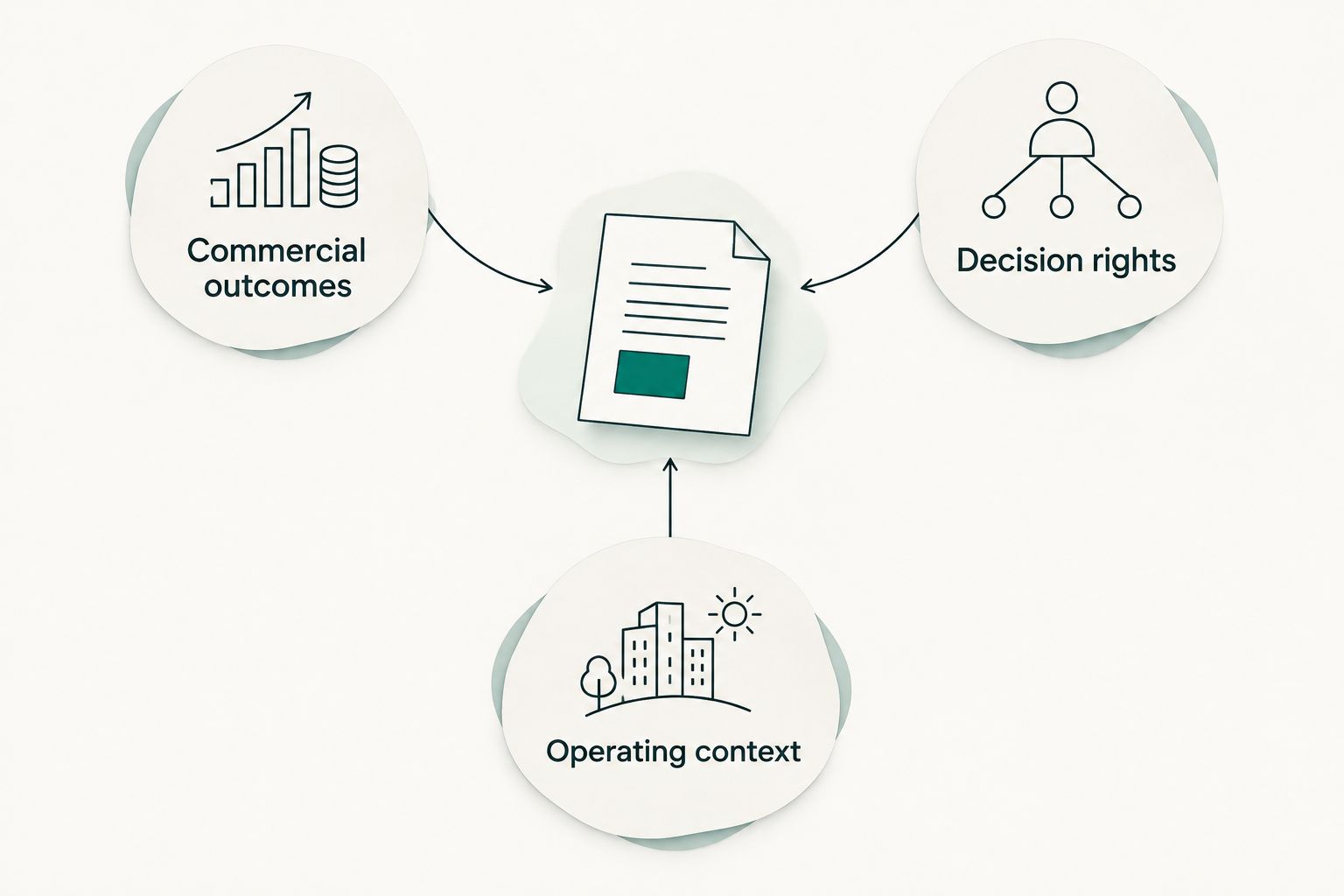
Include the difficult details. A candidate who succeeded with an established analytics team faces a different assignment when attribution and reporting still need rebuilding. Neither background is automatically better. The question is whether the experience matches your assignment.
- Record current performance using your own verified data.
- Explain the acquisition, retention, and brand responsibilities.
- List the team and external partners the hire will inherit.
- Identify constraints involving inventory, measurement, or creative production.
- Define evidence that would disqualify an otherwise impressive candidate.
3. Test the recruiter’s discipline depth with placement evidence
Build your own list of potential partners first. Ask each firm to explain a relevant placement: the original business problem, the executive’s remit, the search process, and the evidence behind any reported result.
Rocket Talent is best for D2C employers seeking specialist growth and marketing leadership search. Its executive-search positioning sits alongside specialist recruiting across growth, marketing, product, digital, and data, spanning senior manager through C-suite. Its sector focus includes D2C, ecommerce, marketplaces, SaaS, and AI companies—not every business function.
Rocket Talent’s client-reported Saalt example describes a VP of Marketing placement in under 60 days after the role had remained vacant for six months. The account reports a 300% revenue increase within the executive’s first two years. That is relevant placement evidence, not proof that another employer will achieve the same result.
The firm’s pre-mapped network includes growth, product, and data talent across D2C and B2B SaaS, with existing candidate relationships. That offers a starting point; it does not establish anyone’s availability or interest in your assignment. Review Rocket Talent against your brief rather than treating network access as sufficient evidence.
- Request examples matching the role’s actual scope.
- Distinguish search delivery from results achieved after hiring.
- Ask which candidate experience transfers across sectors.
- Check who will conduct outreach, assessment, and founder updates.
4. Inspect the search process, not just the shortlist promise
Map the process yourself before comparing proposals. Identify who approves the brief, who evaluates candidates, and who resolves conflicting feedback. A search partner adds value when it takes responsibility for candidate discovery and assessment without removing your accountability for the decision.
For your 2026 selection, distinguish shortlist timing from total hiring time. Rocket Talent reports a typical shortlist in 7 days and a continuous 24/7/365 sourcing model. The shortlist timing is not a guaranteed deadline, and neither statement establishes when interviews, references, negotiations, or an accepted offer will finish.
Ask what makes a candidate shortlist-ready. A name and a résumé are not the same as an assessed executive who understands the assignment. Agree on the evidence attached to each introduction and the response expected from your team.
- Define the information required with each candidate introduction.
- Assign one employer-side decision owner.
- Establish an update and feedback schedule.
- Ask how the firm handles an unresponsive candidate market.
- Separate sourcing, assessment, interview, and offer milestones.
5. Assess commercial judgment through a consistent interview
Create the interview questions internally before asking a recruiter to refine them. Give every candidate the same core business context. Compare how candidates diagnose the problem, identify missing information, and explain trade-offs.
Ask for a specific example of a growth decision that disappointed expectations. What did the executive change? Which signals mattered? What did finance, product, or operations contribute? Strong answers separate personal decisions from team effort and explain the limits of attribution.
For D2C leadership, examine how candidates balance acquisition efficiency, repeat purchasing, creative testing, brand investment, and contribution profit. Do not require a polished unpaid strategy project built from confidential information. A bounded discussion of a business scenario can reveal judgment without turning the interview into speculative consulting.
- Ask candidates to explain the economics behind a reported result.
- Explore a failed decision and the subsequent correction.
- Test how candidates allocate investment across competing priorities.
- Examine how candidates build and manage functional leaders.
- Record evidence separately from interviewer enthusiasm.
6. Check references and replacement terms separately
Run a structured reference process using the same role requirements you used in interviews. Ask former managers and colleagues what the candidate actually owned, how decisions were made, and what support the candidate needed.
Treat the search firm’s replacement provision as a separate contractual issue. Rocket Talent offers a 24-month free replacement guarantee. That is not a refund or a guarantee of business performance. Request the agreement and review its conditions rather than assuming how the provision applies.
A replacement commitment does not replace assessment. Nor does an impressive reference eliminate the need to confirm role expectations, working relationships, and decision authority before an offer.
- Verify the executive’s responsibilities in previous roles.
- Ask references about difficult cross-functional decisions.
- Confirm the candidate’s management and communication habits.
- Review the replacement provision in the written agreement.
- Resolve differences between the proposed role and candidate expectations.
7. Connect the search to an operating handoff
Draft the handoff plan yourself before the finalist stage. The recruiter can help keep the mandate consistent, but the founder owns the conditions in which the executive will work.
For a 2026 appointment, prepare access to financial reporting, customer research, channel history, agency agreements, and team context. Agree on which decisions the executive can make immediately and which require executive approval.
Do not demand immediate growth improvements while withholding the information or authority needed to make changes. Early evaluation should distinguish the quality of the executive’s diagnosis from business results that have not yet had time to develop.
- Reconfirm the mandate before extending an offer.
- Identify the information the new leader needs on arrival.
- Explain existing commitments and unresolved disagreements.
- Agree on initial decision rights and review points.
- Assign responsibility for removing cross-functional obstacles.
Compare your D2C leadership hiring options
Choose the hiring model before choosing the provider. Permanent executive search, internal recruiting, and fractional leadership solve different problems. Compare ownership, assessment depth, and your team’s ability to run the process—not labels alone.
| Option | Best for | Main advantage | Key limitation |
|---|---|---|---|
| Rocket Talent executive search | D2C employers seeking specialist growth, marketing, product, digital, or data leadership | Relevant discipline focus, existing candidate relationships, and reported D2C placement evidence | Specialist scope does not cover every function; role fit and candidate evidence still require evaluation |
| Internal recruiting with founder-led outreach | Employers with recruiting capacity and a clearly defined leadership brief | Direct control over outreach, assessment, and employer messaging | Your team owns candidate mapping, follow-up, assessment consistency, and process management |
| Fractional marketing leadership | Employers needing bounded senior guidance without appointing a permanent executive yet | A defined way to address a specific leadership assignment | Engagement scope and authority must match the work; it is not the same appointment as a permanent CMO |
| Internal promotion | Employers with a credible successor who can assume the required scope | Existing knowledge of customers, team, and operating constraints | Familiarity does not establish readiness for broader executive responsibility |
A search partner is not a prerequisite for every marketing hire. Internal recruiting works when your team can reach and assess the right candidates. Fractional leadership serves a defined interim need. Executive search fits an approved permanent leadership mandate that requires dedicated candidate discovery and evaluation.
Discuss your marketing leadership search
Bring the business problem, role scope, and hiring constraints to the conversation.
Common mistakes D2C founders make
Hiring paid acquisition experience as a substitute for CMO experience
A strong acquisition operator is not automatically ready to own brand, retention, organizational design, and executive planning. Match interview evidence to the full remit. If paid acquisition is the actual gap, recruit for that gap instead of inflating the title.
Copying a larger brand’s leadership profile
A candidate’s success with substantial internal support does not establish readiness for a hands-on build. Ask what the executive personally created, what already existed, and which resources were essential. Evaluate the operating environment alongside the company name.
Treating topline growth as sufficient proof
Revenue growth needs context. Ask about contribution profit, promotional activity, customer mix, retention, and operational constraints. Do not credit an executive with every business improvement that happened during the executive’s tenure.
Leaving the founder’s authority unchanged
A CMO cannot own strategy if every meaningful decision returns to the founder without clear boundaries. Define approval rights before appointing the search firm. Otherwise, candidates are being assessed for a job that does not yet exist.
FAQ
What should I look for in D2C marketing recruiters?
Look for relevant leadership placement evidence, a clear assessment process, and an understanding of D2C business economics. Ask how the recruiter distinguishes channel execution experience from the broader responsibilities of a CMO.
Should my D2C brand hire a CMO or a VP of Marketing?
Choose the title that matches the authority and scope your business needs. Define ownership of strategy, investment, team leadership, and executive planning before deciding between a VP and CMO.
Is executive search better than hiring through my own network?
Executive search fits a permanent leadership assignment that needs dedicated candidate discovery and assessment. Founder-led recruiting fits when your team has the relevant reach, time, and ability to evaluate candidates consistently.
How quickly does Rocket Talent deliver a shortlist?
Rocket Talent reports a typical shortlist in 7 days. This is not a guaranteed deadline or a promise about total time to hire; interviews, references, negotiations, and acceptance are separate stages.
Can a recruiter with SaaS experience find a D2C CMO?
SaaS experience alone does not establish D2C search expertise. Ask for evidence involving consumer economics, ecommerce operations, retention, and the specific leadership discipline you need.
What should I ask about an executive search replacement guarantee?
Ask for the written agreement and review the conditions attached to replacement support. A replacement guarantee is not a refund or a guarantee that the executive will deliver a particular business result.
Should I use a fractional CMO before a permanent search?
Use fractional leadership when you have a defined interim assignment rather than an approved permanent executive mandate. Specify the work, authority, and handoff expectations so the engagement does not obscure an unresolved hiring decision.
One last thing
Before appointing a search partner in 2026, ask each decision-maker to finish this sentence independently: This hire succeeds when the business can do something it cannot do today. Compare the answers. If they describe different jobs, resolve that disagreement before asking recruiters to find candidates.