Chief Commercial Officer Interview Questions and Scorecard
Chief commercial officer interview questions and a scorecard should reveal how a candidate makes decisions across the commercial system. The process needs more than career history and presentation skill. It should test scope, judgment, personal ownership, leadership, financial fluency, and the ability to work with a founder and board.
Start by agreeing on the first-year outcomes. Then assign each interviewer a small number of capabilities to test. A structured process gives the hiring team comparable evidence and reduces the influence of charisma, title, and familiar company names.
Build the scorecard around outcomes
Use five or six outcomes that describe the job in your company. Each outcome should have a clear standard and evidence questions. Avoid generic categories such as “strategic” or “commercial.” Interviewers need to know what good looks like.
A B2B SaaS scorecard might include:
- Sets a focused commercial strategy by market, segment, product, and route to market.
- Builds a reliable operating cadence for pipeline, forecast, customer growth, and investment decisions.
- Aligns sales, marketing, partnerships, customer teams, product, and finance where ownership overlaps.
- Builds and develops a strong commercial leadership team.
- Makes sound tradeoffs using customer evidence and financial context.
- Communicates performance and risk clearly to the CEO and board.
Use a consistent evidence pattern
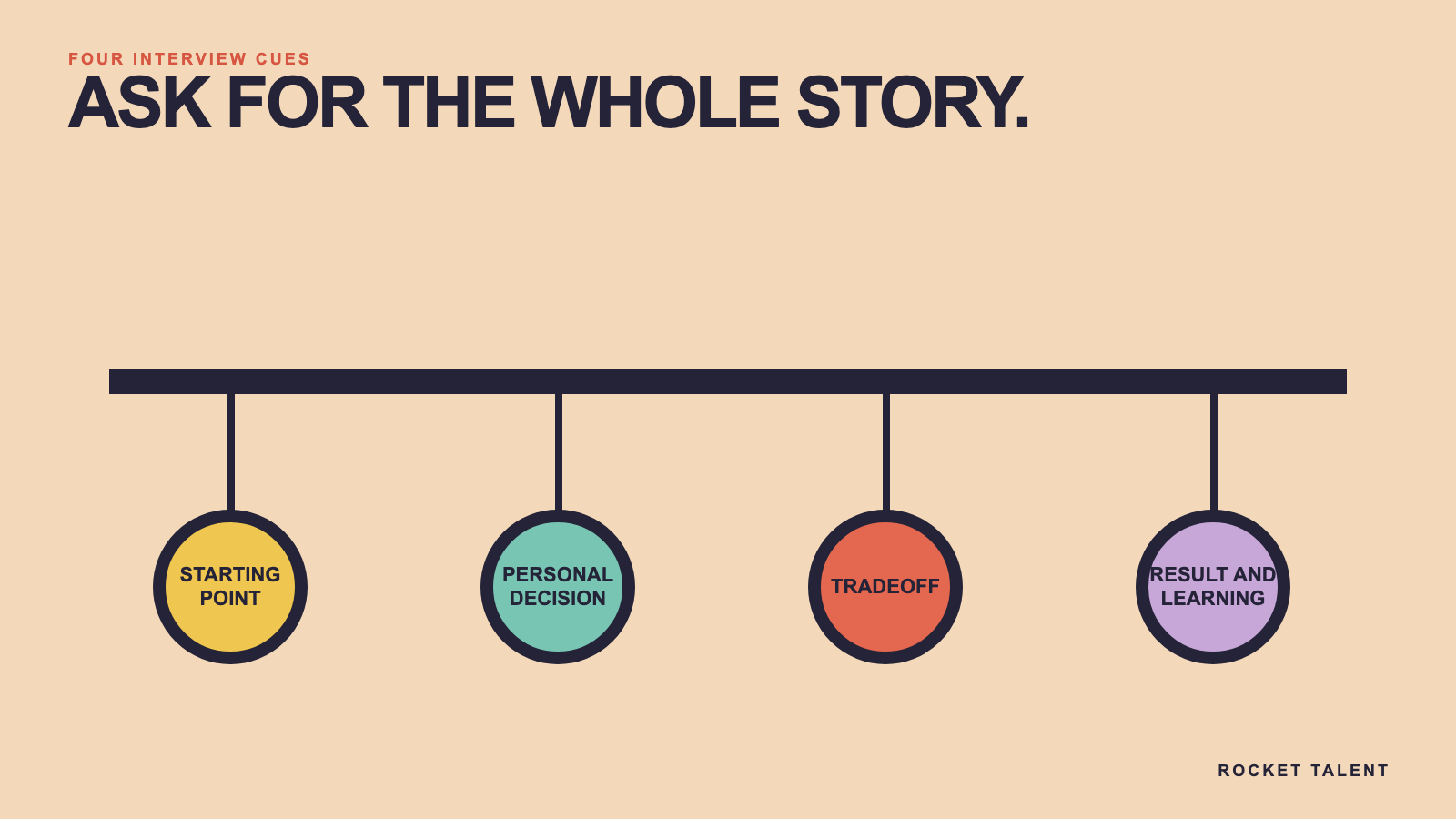
For each example, ask for the starting point, the candidate’s personal responsibility, the decision they made, the options they rejected, the result, and what changed afterward. Follow up until the answer separates the candidate’s work from the company’s momentum.
Do not rush to the next question when an answer sounds polished. Ask who disagreed, what data was missing, which assumption was wrong, and what the candidate would change now. Senior-level evidence usually contains tension and compromise.
Questions on commercial strategy
- Tell us about a time you narrowed a company’s commercial focus. What did you stop funding or pursuing, and how did you reach the decision?
- How have you chosen between customer segments, routes to market, or geographic priorities? Which evidence mattered most?
- Describe a commercial plan that did not work as expected. When did you know, and what did you change?
Listen for actual choices. Weak answers describe planning exercises with no consequences. Strong answers show how the candidate used market, customer, product, and financial evidence to concentrate resources.
Questions on revenue execution
- Walk us through the operating cadence you inherited in your last role. What did you keep, remove, or rebuild?
- Give an example of a forecast you did not trust. How did you diagnose the problem and improve the inputs?
- How have you balanced new-logo growth with retention or expansion pressure? Who owned the tradeoffs?
Look for inspection discipline without process theater. The candidate should understand the difference between reporting activity and improving decisions. They should also be able to explain how sales, marketing, operations, and customer teams contributed to the result.
Questions on organization and leadership
- Tell us about the strongest functional leader you hired. What did you see that others missed?
- Describe a senior leader you could not develop successfully. What did you try, and how did you handle the decision?
- How do you stay close to customers and frontline work while leading through executives?
A CCO must switch between enterprise-level decisions and the evidence underneath them. Be cautious with candidates who speak only about organizational charts, or who claim every team improved without a difficult talent decision.
Questions on CEO and board partnership
- Describe a major commercial disagreement with a CEO or board. What was at stake, and how was it resolved?
- What information belongs in a board-level commercial update? What would you leave out?
- When should a founder remain involved in major deals or market decisions? How would you define the handoff?
Listen for directness without drama. Strong candidates can challenge assumptions, accept a final decision, and maintain trust. They understand that founder involvement can be an asset when the rules are explicit.
Questions on financial judgment
- Tell us about a commercial investment you reduced or ended. Which leading and lagging indicators shaped the call?
- How do customer acquisition, gross margin, retention, and expansion affect the way you prioritize growth?
- Describe a pricing or packaging decision you influenced. What was your role, and what did the company learn?
The candidate does not need to sound like a CFO. They should connect commercial choices to cash, margin, timing, and risk. Vague references to “efficient growth” are not enough.
Use a work-sample discussion, not free consulting
Give the candidate a short, fictionalized case that reflects the role: pipeline has slowed, one customer segment retains better than another, marketing efficiency is under pressure, and the leadership team disagrees on where to invest. Provide enough context to support a decision without asking the candidate to solve your live strategy for free.
Ask for a one-page response or a structured conversation covering assumptions, first questions, sequence, tradeoffs, and communication. Score how the candidate thinks. Do not reward production value or access to outside support.
Score evidence independently before the debrief
Use a simple scale with written evidence:
- 1, insufficient: no relevant example or evidence contradicts the requirement.
- 2, limited: adjacent experience, unclear ownership, or material gaps.
- 3, credible: relevant evidence at a comparable level with manageable risk.
- 4, strong: repeated, specific evidence in conditions close to the mandate.
- 5, exceptional: unusually strong evidence plus clear learning from difficult situations.
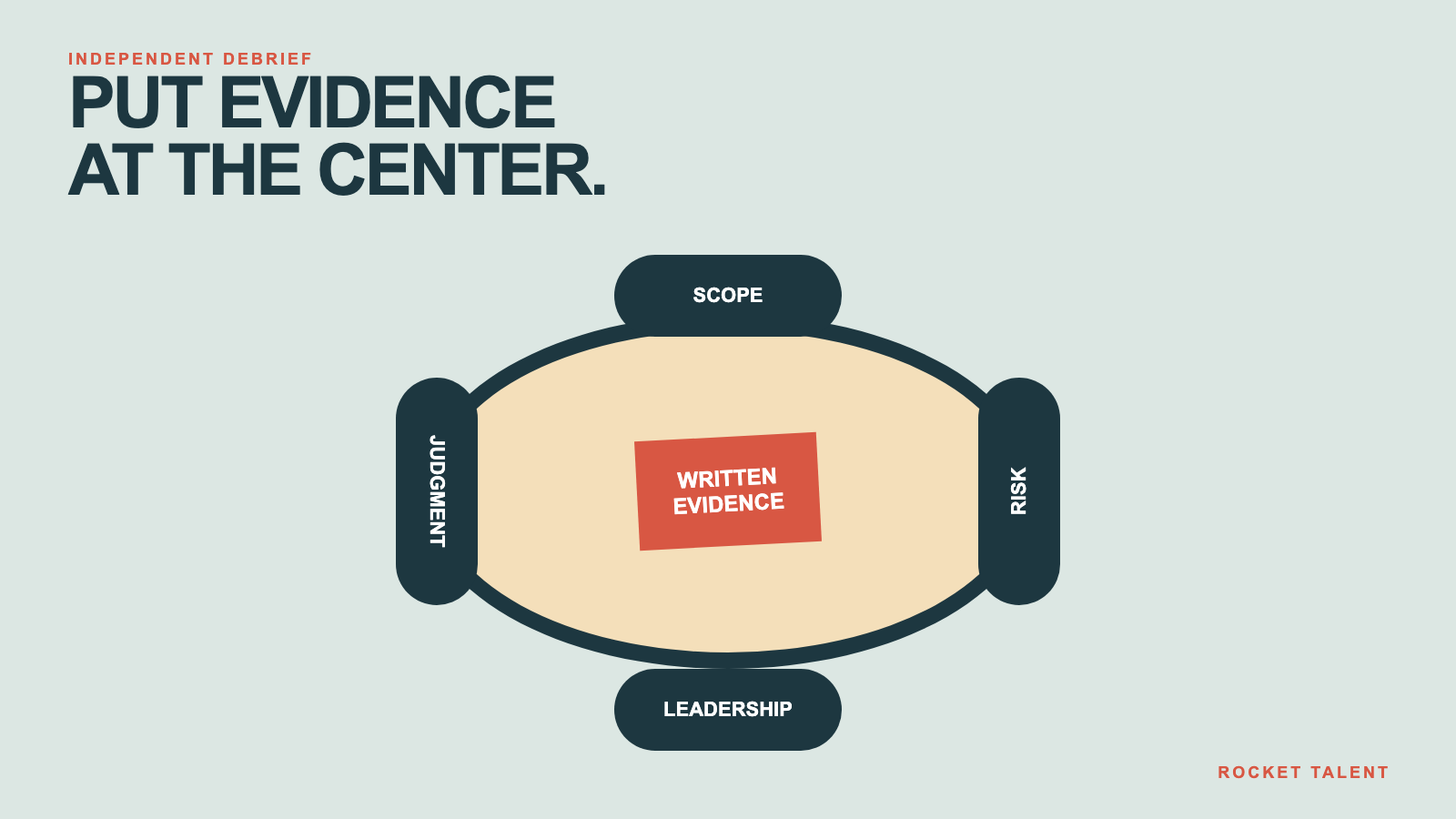
Interviewers should record their score before hearing the group’s view. During the debrief, discuss evidence and risk by scorecard category. Avoid a general vote on whether people “liked” the candidate.
Red flags to investigate
- Every result is explained as a team achievement, with no clear personal decision.
- The candidate relies on company reputation or scale instead of comparable operating conditions.
- They cannot describe a failed plan, difficult tradeoff, or senior talent mistake.
- Commercial strategy means a long list of initiatives with no prioritization.
- Forecast problems are always blamed on frontline discipline or systems.
- Board communication is treated as presentation polish rather than decision support.
- The candidate expects broad authority but avoids accountability for cross-functional outcomes.
A red flag is a prompt for deeper evidence, not an automatic rejection. The final decision should separate confirmed risk from unanswered questions.
Finish with targeted reference checks
Use references to test the remaining two or three risks. Ask former CEOs, peers, and direct reports different questions. A CEO can speak to judgment and trust. A peer can explain cross-functional behavior. A former report can describe leadership standards and how the candidate handled pressure.
Share enough about the mandate to make the conversation useful. Ask for specific examples, including where the candidate would need support in your environment. Reference checks are strongest when they challenge the interview conclusion rather than confirm it.
Sources for further context
- OpenView product and SaaS benchmarks for stage and growth-motion context.
- SaaStr for practical perspectives on SaaS executive hiring.
- McKinsey growth, marketing, and sales insights for commercial leadership research.